What to Say When Two Products Look the Same and Yours Costs More
When two products look alike on the counter, the difference has to be said out loud, in terms of what this customer cares about.

When a cheaper competitor’s product looks the same as yours, first ask what the customer cares about. Then explain what they cannot see in terms of a result they care about. Gary Davidson of Metal Sales, sales trainer Jim Wilcox and A.J. Ernst of The Wooster Brush Company agree on the order. First, find out what matters to this buyer. Next, explain the hidden difference as a result the buyer gets. Then talk about the cost over the years. Never drop the price without getting something back.
Set two metal roofing panels on the counter. One comes from a national manufacturer. The other comes from a local shop and costs less. Gary Davidson has been with Metal Sales since 1984. He says that when a buyer sets those two panels side by side, “you can’t tell the difference.” He adds: “It looks like metal roofing” (11:17 to 11:58).
Davidson is the national accounts manager at Metal Sales, which makes metal roofing and siding. The yards that sell his panels compete with a growing number of local and regional roll formers. A roll former is a shop that runs flat metal through a machine to shape it into panels. Davidson says it costs very little to get into that business (11:17). So the counter keeps hearing the same question: why is yours more?
What makes two look-alike products different?
Usually the parts nobody sees on the counter: testing, ratings and coatings. Davidson’s answer starts behind the panel. He lists product testing and ratings, all done before a panel reaches the yard (11:58). He adds the paint system and the coating under the paint, which he says matter to how long the panel lasts (12:28).
None of that shows when two panels sit side by side. Somebody has to say it. Davidson puts the first job on the manufacturer. His team has to “educate the member on” it, he says, so the yard can explain it to the buyer. A member is a store or yard that belongs to the Do it Best co-op. The co-op is a wholesaler owned by the independent stores that buy through it.
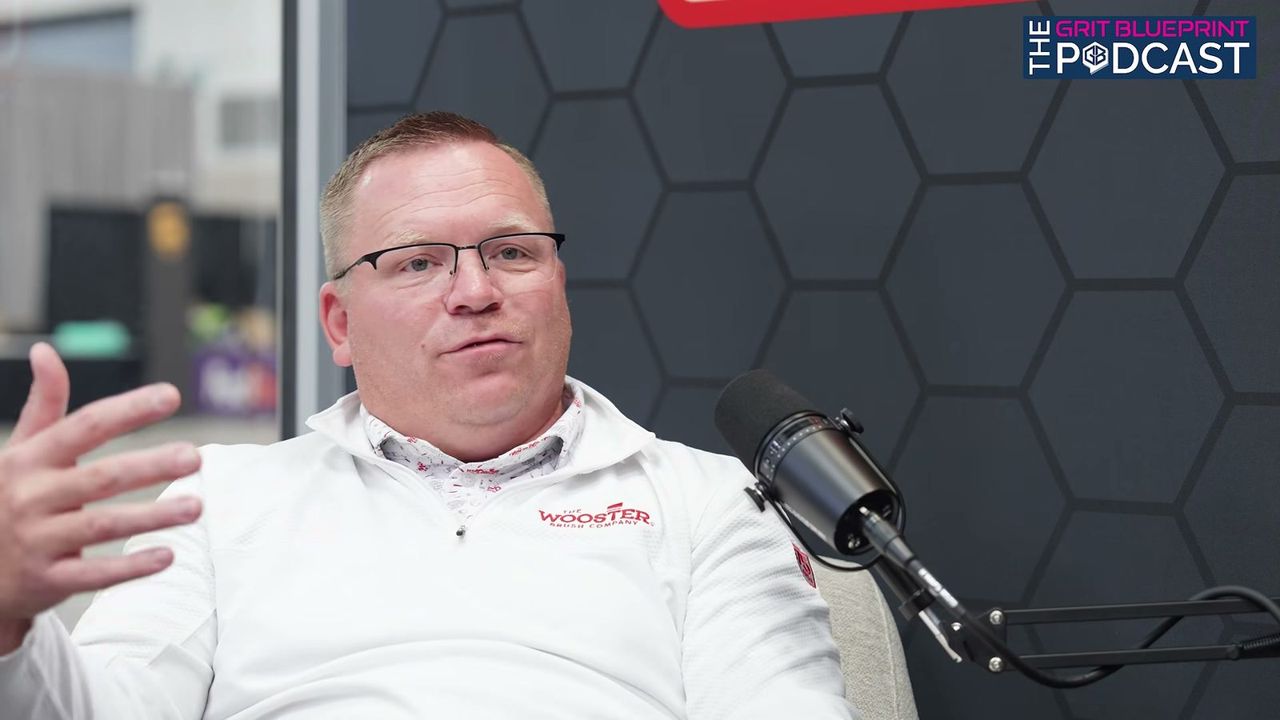
A.J. Ernst sees the same problem in a different aisle. Ernst is director of sales at The Wooster Brush Company. The company makes paint applicators: brushes, rollers and the tools that go with them. A cheap brush and a good brush look close enough on the shelf. The difference shows up on the wall. “The paintbrush will leave paintbrush marks behind, and you’ll have, like, a framing of that wall” (6:45).
Say the result, not the ingredients
Wooster changed its packaging in 2019 with this in mind. The aim, Ernst says, was “to kind of tell you what the product result’s going to be, and not as much of what is in the actual product” (13:41).
That works at a counter too. The name of a coating means little to most buyers. What the coating does for them means a lot. A wall with no brush marks is a result.
Only the customer decides what is worth more
Jim Wilcox trains salespeople for a living. He is CEO of Wilcox & Associates, a Sandler sales training organization. He thinks most sellers have value backwards.
As a sales professional, I don’t bring the value. You own the value. If I can align my product or my service to that, the sale will happen. If I don’t do that, then I get reduced down to the lowest common denominator, which is always price.
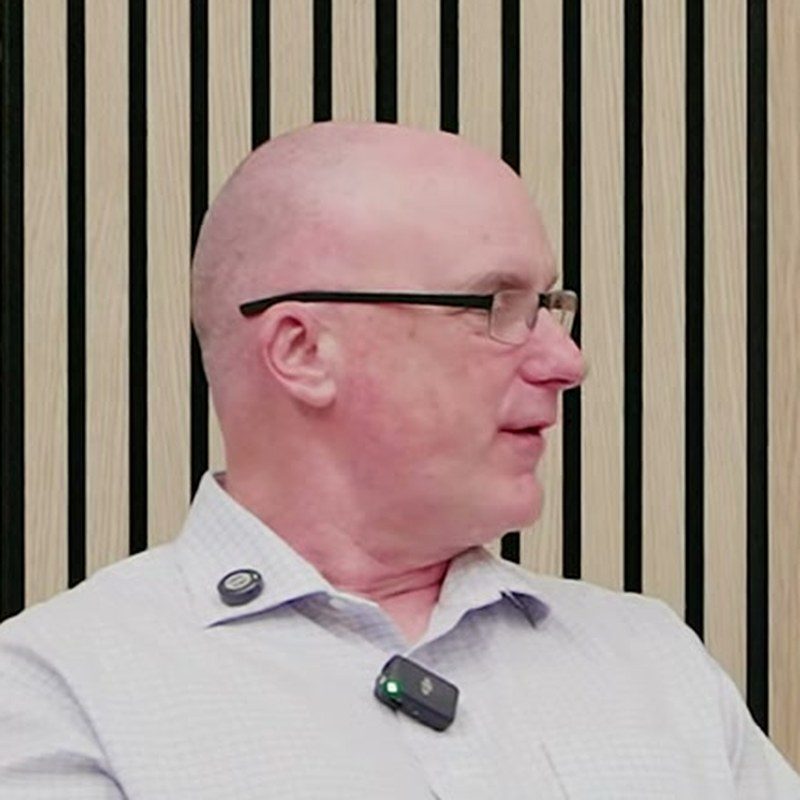 Jim WilcoxCEO, Wilcox & AssociatesFrom our interview, 0:00
In counter terms, a test rating is only worth money to a customer who cares about what it protects. Wilcox has a second line that he jokes he would get as a tattoo: “all things being equal, price only matters in the absence of value” (10:03).
So before you explain your product, find out what this buyer cares about. Ernst gives store employees two or three questions for the paint aisle (5:37). Is the project interior or exterior? What type of coating? What type of finish do you want? A customer who wants a smooth finish in a bedroom has just told you which roller cover to hand over.
How do you explain a higher upfront price?
Talk about what the product costs over the years as well as on the first day. A better product often costs more on the first day. Davidson does not dodge that. He says the upfront cost of a metal roof is going to be more than other materials, so “you really want to talk about the lifecycle cost” (14:40). Lifecycle cost is what a product costs over all the years you own it, including replacing it.
His example: a customer may have to replace another kind of roof twice in the time one metal roof lasts. That is Davidson’s claim for his own product category. Check the warranty and the numbers for the exact product in front of you before you repeat it.
He also makes the case without running down the other product. His aside about shingles: “not to knock asphalt, they’re king, they’re not going away” (18:33).
Know what “good, better, best” means in your aisle
Good, better, best is the common way to lay out three price levels of the same kind of product. Ernst says the labels are not enough. “There is a good, better, best model, but I think you have to understand what that actually means” (11:26).
Suppose the person at the counter cannot say what the customer gets for stepping up a level. Then the customer will choose by price.
Should you ever match a cheaper competitor on price?
Only if you get something of equal or greater value back. Wilcox says there is a time and a place to adjust a price. His rule: “I’m only going to do that if I’m getting something of equal or greater value in return” (12:09).
He has a name for the habit of matching a competitor just to win the order. He calls it “the tax the owner pays for having salespeople that don’t think beyond selling on price” (13:06). For that conversation step by step, see How to Answer “Your Price Is Too High” Before You Touch the Number.
Where the counter gets the answers
Nobody at a counter can test a roof panel. The knowledge has to come from the people who make the product. Both manufacturers say it is there for the asking.
- Davidson says a yard can call Metal Sales’ territory salespeople, inside salespeople and estimators (9:41). “We do estimates free of charge every day for the members.”
- Ernst says Wooster’s reps are in stores “pretty much daily” and will give one-on-one training and leave printed material behind (13:18).

Say who the premium product is for, and who it isn’t
If a customer cannot explain why your product is worth more, there is still work to do. And “quality and service” will not do it. The difference that wins is the one this customer cares about.
So ask before you pitch: about the job, what has gone wrong before and what would make the decision easier. Then tie the product to the answer.
Be straight about fit, too. The higher-priced option will not be right for every buyer or every job. When the cheaper product is the right call, say so. It is why a customer believes you the next time you say yours is worth more.
What to do next
- Name the two products at your counter that most often lose to a cheaper one that looks the same.
- Call the manufacturer’s rep or inside sales for each one. Ask what is tested, rated, coated or built differently that a customer cannot see. Ask for it in writing.
- Turn each answer into one sentence about the result the customer gets.
- Write two or three questions that tell you whether that result matters to the buyer in front of you. Use Ernst’s three as a model.
- Agree as a team what you ask for in return before anyone lowers a price.
Next, read Teach Before You Talk Price and Ask Why Before You Walk a Customer to the Product.
The Gary Davidson interview was recorded for an episode sponsored by Do it Best Group. The A.J. Ernst interview was recorded for an episode sponsored by Wooster Brush.
Questions people ask
How do you explain why your product costs more when it looks the same?
Name what the customer cannot see, such as testing, ratings or coatings, and say what each one does for them. Gary Davidson of Metal Sales says the manufacturer has to teach the yard first so the yard can explain it at the counter. Ask what the buyer cares about before you start.
What is lifecycle cost?
Lifecycle cost is what a product costs over all the years you own it, including repairs and replacement. A product that costs more on the first day can cost less over its life. Check the warranty and numbers for the exact product before you make that case.
Should a salesperson lower the price to match a competitor?
Only for something of equal or greater value in return, says sales trainer Jim Wilcox. Matching a price just to win the order teaches the customer that price is the only thing that matters.
What does good, better, best mean?
It is a common way to lay out three price levels of the same kind of product. A.J. Ernst of The Wooster Brush Company says the labels are not enough. The person at the counter has to be able to say what the customer gets for stepping up a level.
Where can a counter salesperson learn what makes a product different?
From the people who make it. Metal Sales offers territory and inside salespeople and estimators to the yards it supplies, and Wooster’s reps train store staff and leave printed material. Ask your rep for the differences in writing.
Watch the full interviews
Stop Competing On Price, Value Is The Real Differentiator with Gary Davidson, Mastering Sales Beyond Price with Jim Wilcox, and 3 Questions That Help Customers Pick the Right Paintbrush with A.J. Ernst. Times in parentheses mark where each quote sits in the audio episode.
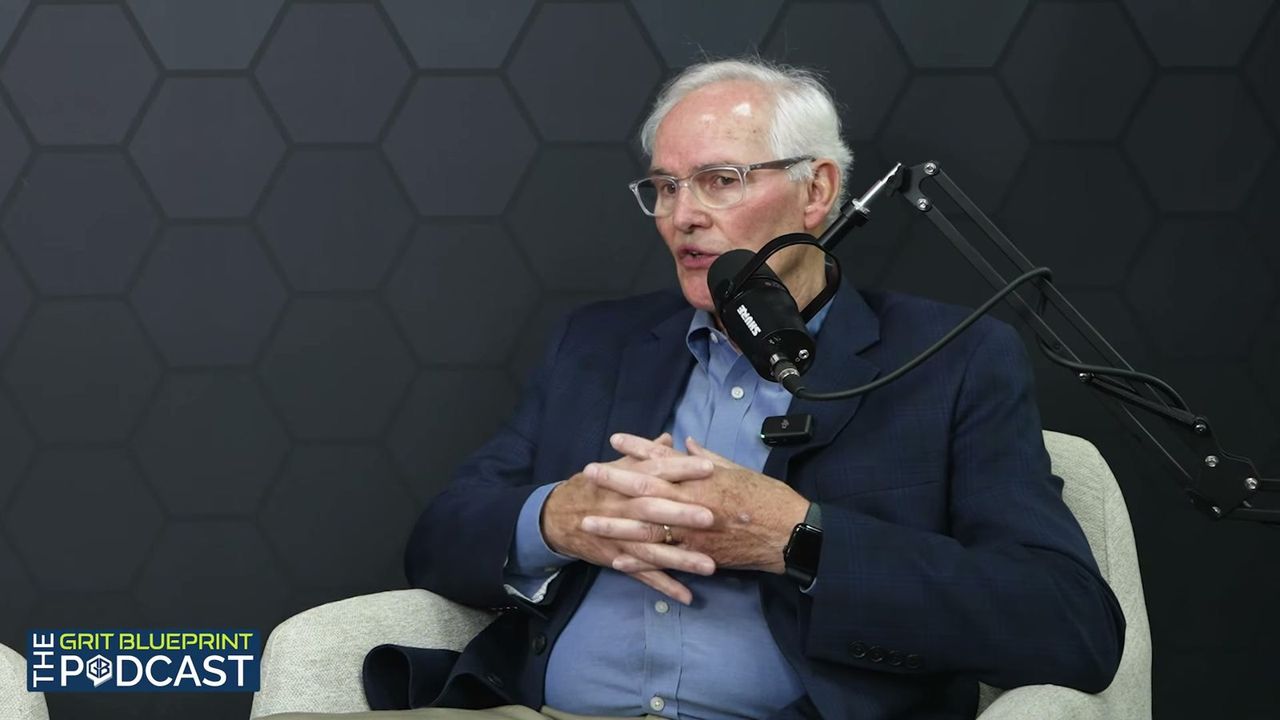
Gary Davidson of Metal Sales explains how a lumberyard counter sells metal roofing against a local roll former: testing and ratings the buyer can't see, paint systems, and lifecycle cost. He also covers free estimates and where residential demand is growing.
A Grit Guide original. This piece is built from our own interview.
Episodes in this piece
Sources
- Stop Competing On Price, Value Is The Real Differentiator (interview with Gary Davidson, National Accounts Manager, Metal Sales; quotes at 9:41, 11:17, 11:58, 14:40 and 18:33) Grit Guide, Grit Blueprint Podcast
- Mastering Sales Beyond Price (interview with Jim Wilcox, CEO, Wilcox & Associates; quotes at 0:00, 10:03, 12:09 and 13:06) (July 2025) Grit Guide, Grit Blueprint Podcast
- 3 Questions That Help Customers Pick the Right Paintbrush (interview with A.J. Ernst, Director of Sales, The Wooster Brush Company; quotes at 6:45, 11:26, 13:18 and 13:41) Grit Guide, Grit Blueprint Podcast