
About This Episode
This tour goes inside the window side of Tucker Door & Trim’s 290,000 square foot facility in Monroe, Georgia, with Stefanie Couch as host. Tucker is a two-step distributor that also manufactures windows and doors, and it makes every window custom per order. The tour opens by following one trapezoid window from Tucker to Reeves Building Supply in Clayton, then to a job site in Cleveland, Georgia, where Wilkinson Construction Management installs it. A mistake on an order like that means a remake, and remakes can take weeks.
Chris Kotlowski, who runs production for the window department, walks the line in order. Glass comes first. Common sizes arrive precut, and a cutter with an optimizer handles odd sizes and special glass, getting the most pieces out of each sheet. Some custom curves are cut by hand. The glass is washed in three tanks, dried with an air knife, sealed in a room kept at 73 degrees, pressed at 120 degrees and filled with air or argon.
From there the glass goes to one of three lines. Wood sashes are assembled by hand around a rubber boot. PVC sashes are built first, then an automatic glazer lays the silicone and the glass is dropped in. Vinyl sashes are welded, then cleaned. Barry Williams and LeeAnn Gilbert introduce themselves along the way.
One window, three companies
The video opens with a single trapezoid window. Tucker Door & Trim built it in Monroe, Georgia, to fit the measurements on one order. Tucker delivered it to Reeves Building Supply, the dealer in Clayton. Reeves took it to a house in Cleveland, Georgia, where Wilkinson Construction Management put it in.
On the job site, the crew shims it, plumbs it, and checks it twice. Shims are thin wedges that set a window straight in its opening. Plumb means straight up and down. The homeowner never sees that work. They see the shape they asked for and the light across the living room floor.
Cutting the glass
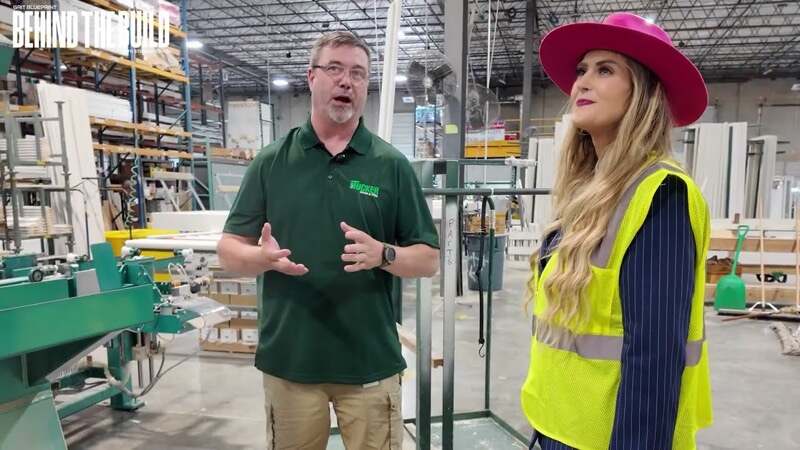
Back at the plant, Chris Kotlowski runs window production. He lays out the flow before the tour starts. The glass gets cut and insulated first. Then it goes to the vinyl, PVC, or wood line, where the sash is built. The sash is the frame that holds the glass. At the end, the window gets its stickers and goes to the truck.
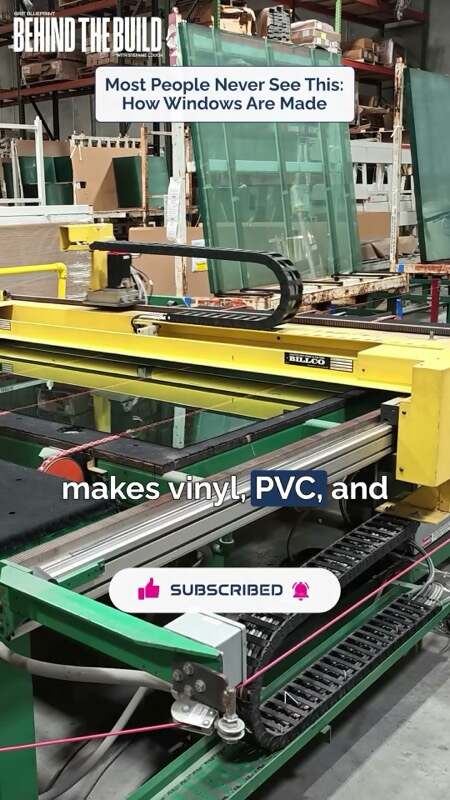
Most common glass sizes come in precut from the glass maker. The plant’s Billco cutter handles odd sizes and special glass. An operator types in the size. The machine pulls a sheet down a rope conveyor. Its optimizer plans the cuts to get the most pieces from that sheet. The size of each piece pops up on a screen so the crew knows what they are breaking out.
A curved piece is different. The machine has no CAD drawing for a custom curve, so a person does it.
Making insulated glass
Most windows use insulated glass: two panes sealed together with a space between them. At Tucker, each piece goes through a washer with three tanks. First comes hot water, then a rinse, then a final rinse with nothing in it. An air knife blows the water off.
Next is the green room, kept at 73 degrees all year for the Duraseal, the sealant that goes on the glass. The panes are paired and capped, then run through a press at 120 degrees so the glass and seal bond. Every unit that day came out 11/16 thick. Last, a worker fills the space with air or argon, whatever the customer ordered. Chris says argon is a heavier gas. Heat and sun take longer to cross from the outside pane to the inside one.
Three ways to build a sash
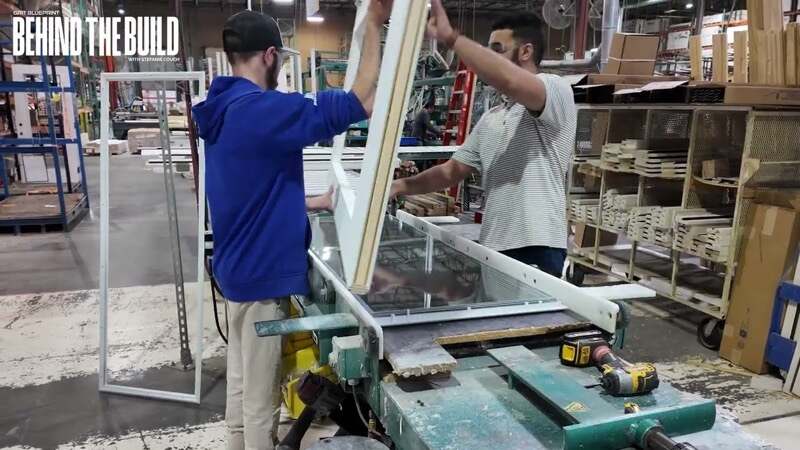
Wood. A worker puts a rubber boot around the glass, then fits the wood parts around it by hand. Chris says it all fits like a puzzle. The next station clamps it, pre-drills it, and adds screws and tilt pins. Tilt pins are the pins at the sides of the sash. Weather stripping goes on last. Barry Williams, who manages the window division, says he helped design every window Tucker makes.
PVC. Parts arrive in long lengths and get cut to size. A worker runs them through shapers that mill the ends. Another worker builds the sash with no glass in it, adding the lifts, locks, and stiles by hand. Then it goes to the automatic glazer, which clamps the sash and lays the silicone before the glass drops in.
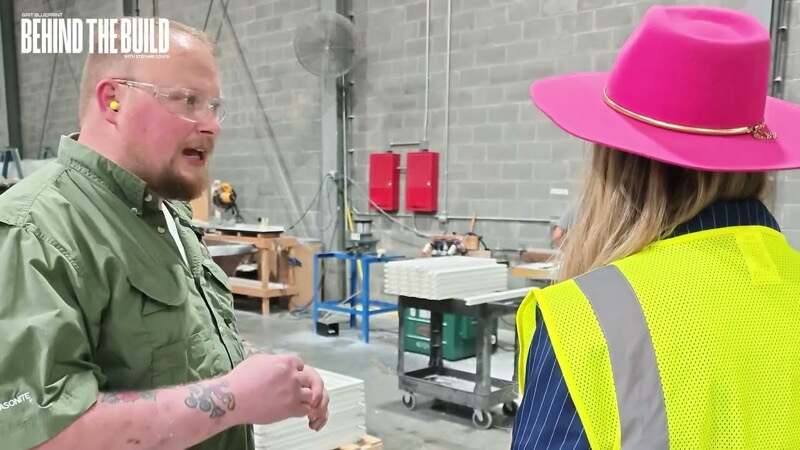
Vinyl. Here the corners are welded. On the Greller S400 Sash Welder, the machine times how long to heat the pieces and press them together. A melted corner leaves extra material, so a corner cleaner cuts off the slag. LeeAnn Gilbert, team lead of the 3300 line, shows a corner on the GED RoboClean before and after. The after is flush.
Out to the dock
At the end of the line, workers set the sashes in the frame. Where the order calls for a stationary sash, they nail it in. Then come the stickers and logos, and the window gets strapped. Each one has braces on the bottom.
From there it goes straight to the dock and onto a truck. The tour ends next to a big window Chris calls a 5052. The biggest Tucker makes is a 6062, about a foot taller and a foot wider.
What To Do With This
Check a custom order at every handoff
Tucker builds the window, the dealer delivers it, the builder installs it. Confirm the measurements each time the order passes through your hands, because a one-of-a-kind window cannot be swapped out.
Tell customers what a remake costs in time
When you take a custom window order, say plainly that it is made per order and that a remake can take weeks. It gives the customer a reason to confirm sizes with you.
Ask whether the glass gets air or argon
Chris says the insulated glass is filled with air or argon depending on what the customer wants. Ask the question on your next window order so the choice is made on purpose.
Check plumb twice on install day
The trapezoid on the job site is shimmed, plumbed, checked and checked one more time. Do the second check before the trim goes on.
Learn the order of the line
Write down the flow Chris gives: glass cut, glass insulated, sash built, stickers on, out to the truck. Knowing the steps helps you explain to a customer what goes into the order.
Plain English
- green room
- The climate-controlled room, kept at 73 degrees all year, where Tucker insulates its glass.
- optimizer
- The part of the glass cutter that takes the sizes entered and lays out the cuts to get the most pieces out of a sheet.
- air knife
- The step after the final rinse that blows all the water off the glass.
- argon
- A heavier gas that can go between the two panes of glass in place of air. Chris says what hits the outside pane takes longer to get through it to the next pane.
- boot
- The rubber seal put around the glass on a wood sash before the wood parts go on.
- automatic glazer
- A machine that clamps a sash and puts in the exact amount of silicone before the glass is dropped in.
Questions this video answers
Why can't a dealer swap out a wrong custom window?
There is no standard size on a shelf to swap in. Tucker Door & Trim builds every window to one order, so a mistake means building it again. A remake can take weeks.
Is argon better than air between window panes?
Chris Kotlowski of Tucker says argon is a heavier gas than air. Heat and sun that hit the outside pane take longer to get through it to the inside pane. The plant fills each unit with air or argon based on what the customer orders.
Why is some window glass still cut by hand?
Tucker's cutter handles most sizes, but it has no CAD drawing for a custom curve. For a shape like that, a worker cuts the sheet down and then cuts the curve freehand.
How do you make a vinyl window sash?
The corners are heated and pressed together on a sash welder, which times each step. A corner cleaner then cuts off the slag from the weld. LeeAnn Gilbert's team cleans the corners until they are flush.
What does an automatic glazer do?
It clamps a PVC sash and lays down the exact amount of silicone before the glass goes in. That keeps silicone from squeezing out. A worker then drops in the glass and finishes the glazing so it cannot pop out.