How Wood Shed Lumber Uses Live Radio to Become a Household Name
Twice a week Sharona Eiserer takes a live call from her local radio station. She talks about her town, her team and her family. Customers have driven 45 minutes to meet the voice.
Wood Shed Lumber and Hardware gets known by going live on local radio twice a week. Sharona Eiserer, its co-owner and president, takes a call from the station on Tuesday and Thursday mornings. She talks for five to 10 minutes, with no script, about her town, her team and her family. Customers have driven 45 minutes to meet the voice.
On Tuesday and Thursday mornings, Sharona Eiserer’s phone rings. It is a local radio station. About a minute later she is live on the air, with no script, for five to 10 minutes.
Wood Shed has six stores in rural western Missouri. She does not spend the air time reading prices. One morning she talked about a fire in Cameron, Missouri, and how her store manager took care of the community. Another morning it was the puppy her daughter got for Christmas.
That small talk is how a dealer with no television budget gets known, one car radio at a time.
Why a commercial was not enough
Eiserer and her husband, Cecil, a builder, bought their town’s lumber yard in 2016. The family that owned it was ready to retire. She repeats his reason for doing it: “If you lose your grocery store and you lose your hardware store, your town dies” (0:00 and 4:23 in our interview).
She did not come from the hardware business. She and Cecil had been running Pizza Hut franchises. The business went from one store to three, and it is now six.
People in a small town still have other places to shop, and she knows it. Her goal is short: “I want people to know who Wood Shed is” (15:58). She says she cannot afford television. She has tried billboards and mailers. Radio is where people get to know her.
How does a live local radio segment work?
The station calls the store, and the owner talks on the air for a few minutes. A saleswoman from the station had been asking Eiserer to advertise for a while. Eiserer liked her hustle and gave her a chance. The saleswoman then offered something other than a recorded spot. Would she go live?
Eiserer’s first question was whether she had to go anywhere. She does not. The station calls her. The DJ follows her on Facebook and often checks what the store has going on. She gets about a minute of warning and an open invitation to talk about anything.
What she picks is the lesson. She thinks about the person in the car. She asks herself what she wants that person to hear. Her answer is who she is, who her team is and who her family is, because those are the people a customer meets in the store.
She is on more than one station: a rock station, a country station and an older rock station. Each one reaches a different group of listeners across her area.
Does local radio bring customers into the store?
Eiserer says it does, and she counts it in people. Eiserer was on the floor of one of her stores, running network cables to a computer. An employee called her by name. A customer nearby stopped and asked if she was the Sharona from the radio.
I know people have hopped in the car, they drove 45 minutes to come see our store just because they heard me on the radio.
 Sharona EisererCo-owner and president, Wood Shed Lumber and HardwareFrom our panel
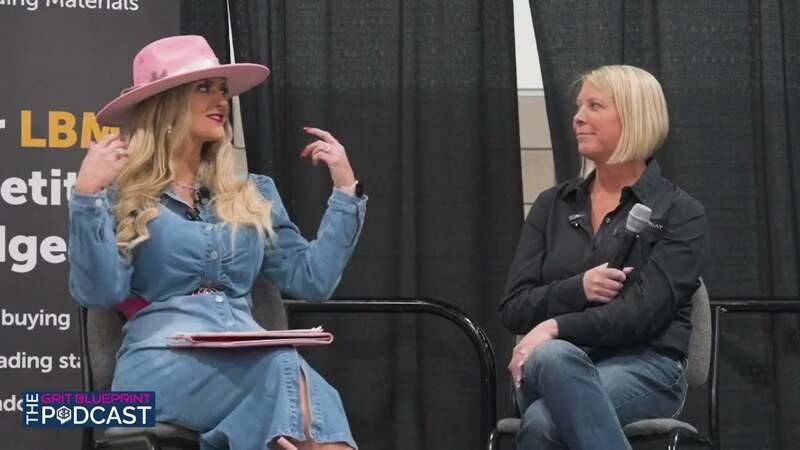
She said that on stage at a Do it Best market (7:33 in the panel recording). Do it Best is the member-owned co-op, a buying group owned by the stores it supplies, that Wood Shed belongs to. Eiserer also serves on its board.
Her own ads, played in her own stores
The radio spots do a second job. Wood Shed plays its own commercials inside the stores, through the co-op’s in-store radio. Eiserer records them sitting in her car, where it is quiet.
Her reason: “if you’re in the car and you hear one of our commercials, when you walk into the store, you should hear the same voice” (15:58).
The same rule covers everything else a customer sees. “So whether it’s our Wood Shed logo that’s flying up in the air, or if you see it on Facebook or hear us on the radio, it all just has to tie in” (17:49).
Then she turned the camera on herself
Radio felt comfortable. Video did not. Her employees were nervous about it too. She decided she could not ask them to do something she would not do. So she went first. At each store she started a live video in the parking lot. Then she walked viewers through the aisles.
Customers told her they had no idea the stores had added clothing. One woman said she used to wait in the vehicle while her husband shopped. After the video she came inside, because Wood Shed carries shoes and baby clothes too.
Nobody has to be watching while you are live. Someone told Eiserer a live video is “for the people that are looking at it later” (25:49). The recording stays on the page.
Once the boss had done it, the crew followed. They now make their own TikTok videos. Even the quiet employee at the contractor desk, the counter that serves builders and tradespeople, has joined in. They send the videos to Eiserer. She posts them or sends them to the marketing team that helps her post them.
Her one correction so far was the store’s name. Early videos spelled Wood Shed as one word. She told the team she loved what they were doing. She said she did not want to micromanage them. Then she asked them to get the name right, since it is on their uniforms. They fixed it and kept going.
What should a dealer fix before going on the air?
Its Google listing. Asked what a dealer should do first thing Monday, Eiserer skipped past radio and video. Her answer: “the first thing you need to do is go ask Google if they know where your store is” (30:18 in the panel recording).
When she searched, she found an old listing for a store she had bought years earlier. It was still live. She checks Apple Maps too. Her habit is to look at the business the way a customer would and see whether she can find herself.

Let the town know you before you ask them to buy
Eiserer’s radio segment gets the order right. People have to see you and know you before they choose you. A price ad asks to be chosen before anyone knows who you are. Five minutes about the fire in Cameron or a puppy at Christmas turns the store into people a listener already knows.
Keep those details. Owners tend to cut the funny or personal part to sound professional, and that is the part people remember. A lot of good operators stay invisible because talking about themselves feels like bragging. Letting a town know who will answer the phone is useful, and customers treat it that way.
Eiserer went on camera first so her crew would follow. For an owner who is waiting to feel ready, that may be the most useful part of the story. Courage can come before confidence. The first call is the hard one.
What to do next
- Search for your store on Google and Apple Maps from a phone. Check the name, address and hours for every location, and claim any old listing that is still showing.
- Ask your local station whether it offers a live call-in segment, not only recorded spots. Five to 10 minutes is enough.
- Before each segment, pick one thing from your town, one from your team and one from the store. Leave the price list out.
- Play your own radio spots inside the store, so the voice people hear in the car is the voice they hear at the counter.
- Go live on the store’s social media page once. Start in the parking lot and walk the aisles. Then ask your team to make the next video.
Ready for video next? Read Seven Rules for a Hardware Store’s First Videos. For a one-person marketing plan, see The Four Cs a One-Person Marketing Department Runs On. For how a store picks what to be known for, see A Box Store Landed on Top of Him. He Picked Five Things to Win.
Both interviews were recorded for episodes sponsored by Do it Best Group.
Questions people ask
How does a live radio segment work for a local store?
At Wood Shed Lumber and Hardware, the station calls Sharona Eiserer on Tuesday and Thursday mornings and she is on the air about a minute later for five to 10 minutes. She does not have to go to the studio. Ask your station whether it offers live call-ins as well as recorded spots.
What should a store owner talk about on local radio?
Eiserer talks about her town, her team and her family rather than reading prices, because those are the people a customer meets in the store. One morning it was how a store manager helped after a local fire; another, a family puppy.
Why play your own radio ads inside the store?
So the voice a customer hears in the car is the voice they hear at the counter. Eiserer records her spots herself and plays them through the co-op’s in-store radio, and she keeps the logo, social media and radio tied together.
How do you get employees to make videos for the store?
Go first. Eiserer did live walk-through videos at each store before she asked her team to film anything. Now her crew makes its own videos and sends them to her to post.
What is the first local marketing step for a dealer?
Search for your own store on Google and Apple Maps, the way a customer would. Eiserer found an old listing for a store she had bought years earlier still showing. Check the name, address and hours for every location.
Watch the full interviews
How To Build A Local Brand: Small Town Retail Marketing That Works. The panel is here: Simple Marketing Strategies You Can Implement That Drive Revenue For Independent Businesses.
Sharona Eiserer, co-owner and president of Wood Shed Lumber and Hardware, tells how she and her husband bought their town's struggling lumber yard and grew it to six rural Missouri stores. She also explains how she uses live radio, Facebook and TikTok.
A Grit Guide original. This piece is built from our own interview.
Episodes in this piece
Sources
- How To Build A Local Brand: Small Town Retail Marketing That Works with Sharona Eiserer (interview with Sharona Eiserer, co-owner and president, Wood Shed Lumber and Hardware; quotes at 0:00, 4:23, 15:58, 17:49 and 25:49) Grit Guide, Grit Blueprint Podcast
- Simple Marketing Strategies You Can Implement That Drive Revenue For Independent Businesses (market panel with Sharona Eiserer, Ashley Guest and Kerry Hasselbach; quotes at 7:33 and 30:18) Grit Guide, Grit Blueprint Podcast