A Prompt for Practicing a Price Objection Before the Real Call
Fill in six blanks, paste the prompt in and practice the price talk before the real call.


Fill in six blanks, paste the prompt in and practice the price talk before the real call.
You already know which objection is coming. An objection is the reason a customer gives for not buying yet. This page uses “your price is higher” as its example. This prompt helps you get ready for it in about ten minutes.
A prompt is the set of instructions you type into an AI chat tool such as Claude or ChatGPT. You give the tool the facts of your deal. It gives you a practice sheet: what the customer might really mean, questions to ask, a plain response for each case and what not to say. Then it can play the customer while you practice out loud.
The prompt tells the tool to use only what you give it. It also tells the tool to mark every spot where it needs a fact from you. Check for those marks every time you use it.
A one-page practice sheet for one objection on one deal, and a short role-play to rehearse it.
- An AI chat tool your company allows you to use for work
- The deal you are preparing for: who the customer is and what you are selling
- Three things that are true about your offer
- What you do not know yet, such as what the other quote includes
Why practice this one
Role-play has a bad name because everyone has to make up the scene as they go. The six blanks in this prompt fix that. They hand the tool a real deal, so your practice time goes into asking and answering.
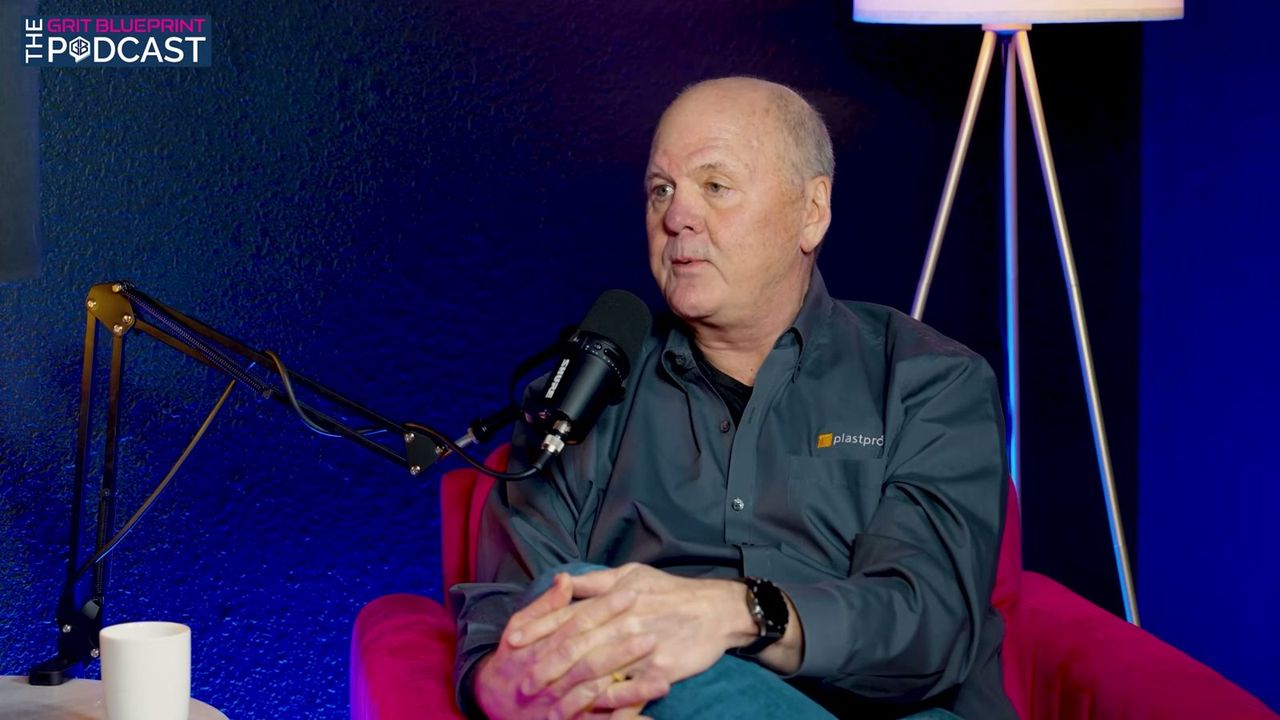
The first thing worth practicing is a question. It comes from Michael Tull, a manufacturer’s rep (a salesperson who represents manufacturers in a territory). He has sold doors for more than fifty years. When someone tells him his price is too high, his answer is: against what? He wants to see what he is being compared to before he says anything about his own number. In the test further down, the tool landed in the same place. One of the questions it wrote was “Can we go through the other quote line by line?” Watch the interview
The prompt
Copy everything below. Replace the words in [brackets] with your own.
You are helping me get ready for a sales conversation in the building products business. Do not invent facts about my company, my products or my prices. Use only what I give you below. If something you need is missing, ask me for it before you write anything else.
My role: [your role and the kind of company you work for]
Who I am talking to: [the customer and your history with them]
What I am quoting or selling: [the product or package]
The objection I expect: [the objection, in the customer’s words]
What I know is true about our offer: [three facts]
What I do not know yet: [for example, what the other quote includes]
Write a one-page practice sheet with these parts:
1. Three things the customer might really mean by this objection.
2. Three questions I can ask to find out which one it is. Keep each question short enough to say out loud.
3. A plain response for each meaning, two or three sentences, using only the facts I gave you. Mark any spot where I need a fact I did not give you with [NEED: …].
4. Two things I should not say, and why.
5. One sentence I can use to ask for the next step.
Then stop and ask if I want to practice. If I say yes, play the customer, give me one objection at a time, wait for my answer, and tell me one thing that worked and one thing to tighten.
Why the prompt is built this way
Stefanie Couch’s advice for a first AI task is to pick one repeatable job. She also says to be crystal clear about what “done” looks like. This prompt follows that advice. Each part has a job.
| Part of the prompt | What it does |
|---|---|
| The first paragraph | Sets the rules: use only my facts, invent nothing, ask if something is missing |
| The six blanks | Give the tool your real situation, so it is not guessing |
| The five numbered parts | Say exactly what the finished sheet should contain |
| The [NEED: ...] mark | Shows every place where the tool needs a fact from you |
| The last paragraph | Makes the tool stop and ask before it starts the role-play |
You can reuse this shape for your own prompts: the task, your facts, the rules, what to hand back and how you will check it.
Learn more from Stefanie Couch: How Smart Companies Are Using AI to Outwork Their Competition
Step 1: Fill in the six blanks with real facts
Write what is true, not what you wish were true. Leave out customer and employee names, account numbers, prices, passwords, payment details and anything your company treats as private. The prompt works with “a custom home builder who has bought framing lumber from us for two years.”
Step 2: Paste it in and read the sheet
A good answer has all five parts and sounds like something you could say across a counter. It also contains [NEED: …] marks wherever you did not give it a fact. If there are no marks at all, be suspicious and read each response for details you never supplied.
Step 3: Fill the gaps yourself
Go get every fact the sheet says you need: the other quote, the name of your inside contact, what you are allowed to do on price and who approves it. The sheet is only as good as these answers.
Step 4: Say yes to the practice
Answer out loud first, then type what you said. Three rounds is enough. Stop when your answer is shorter than it was the first time.
If the first sheet missed, fix a blank and run it again. For a new AI task, a fair rule of thumb is two or three tries to get it right. When it works, save your filled-in prompt in a document so the next deal starts faster.
Finish line
You should now have: A one-page practice sheet for one objection on one deal, and a short role-play to rehearse it.
What it produced in our test
Words in that test: a “drop” is one delivery stop, so “one delivery drop” means everything arrives in one trip. “Line items” are the separate lines on a quote, one for each product or charge. Inside sales means quoting and handling orders from the store or office. A window and exterior door package is all the windows and outside doors for one house, quoted together. Framing lumber is the wood that forms the walls, floors and roof of a house.
Check the answer before you use it
Tick these off as you go. Any box you can’t tick is the step to go back to.
0 of 6 ticked
If the answer is off
If the sheet contains a fact you did not give it, tell the tool which line. Then ask it to remove anything that did not come from your six blanks. After that, read the sheet again from the top. If it keeps happening, stop and write the sheet yourself, using its five parts as your outline. These fixes are plain good practice. They were not part of the test above.
Limits
- The tool does not know your customer, your market or your company’s rules. It only rearranges what you tell it.
- It can still add a detail you did not give it. That is why the checks come before the practice.
- Practice with an AI tool is not practice with a person. Run it once more with a coworker if the deal matters.
- The tool helps you get ready. The conversation is still yours. Let software take routine tasks and keep negotiation and problem-solving calls with people.
- Follow your company’s policy on what can go into an AI tool. When in doubt, describe the customer instead of naming them.
How this was tested
Tested on November 18, 2026 in Claude (Anthropic), model claude-fable-5-2, run once through Claude Code with the inputs shown above. The excerpts are from that run. It has not been tested in ChatGPT yet, and a test in one tool does not tell you how another will answer. A named reviewer has not signed off on this page yet.
What to do next
Next in this path: A Prompt That Turns Site Visit Notes Into a Follow-Up Email. For the thinking behind the questions on your practice sheet, read Teach Before You Talk Price.
Episodes in this piece
Sources
- The Real Reason Customers Buy Again (Grit Blueprint Podcast, Michael Tull with host Stefanie Couch) Grit Guide
- How Smart Companies Are Using AI to Outwork Their Competition Stefanie Couch, Grit Blueprint
- How AI is Transforming Industry Businesses Stefanie Couch, Grit Blueprint
- How to Build Trust With Customers in the Building Industry Stefanie Couch, Grit Blueprint