How Harbin Lumber Loads a Truck So It Comes Off Right
On a Behind the Build tour, Westley Harbin shows how a fourth-generation Georgia lumberyard stages, loads and delivers, and where it found the minutes.
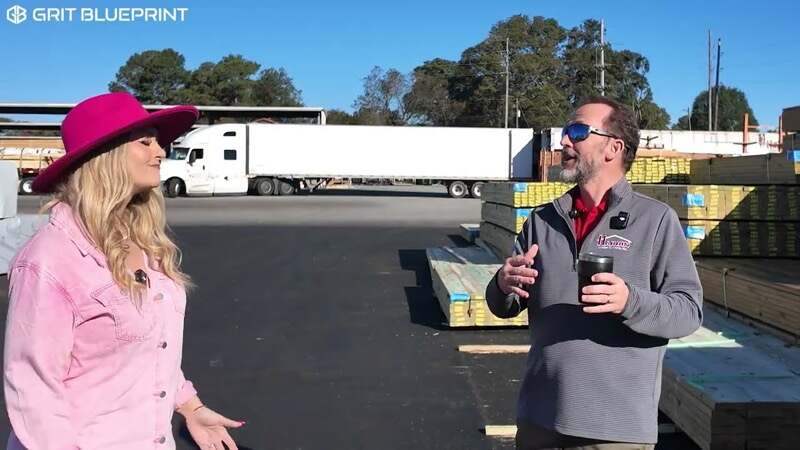
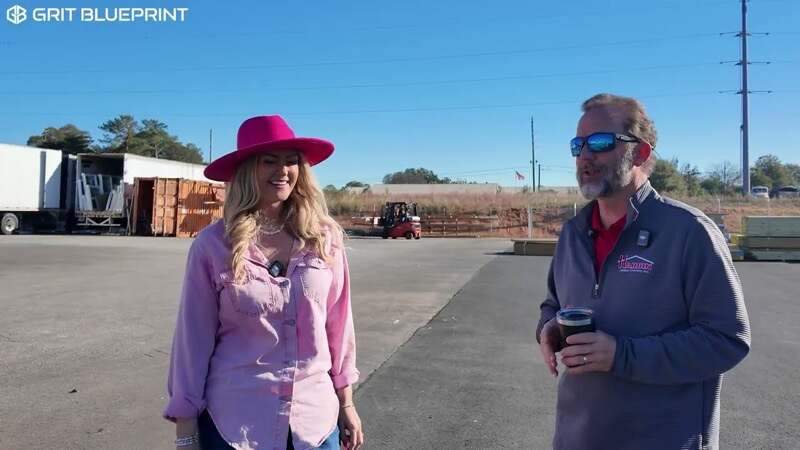
To load a lumber truck so it comes off right, give loading its own space, handle the material as few times as possible and build each load around the order the jobsite will unload it. That is how Westley Harbin runs the yard at Harbin Lumber in Lavonia, Georgia, which he walked through on a Behind the Build tour in 2025.
Harbin Lumber opened in 1917, and Harbin is the fourth generation to run it. Today the company has four lumberyards, a truss plant, a door shop, an installed sales center and a turnkey framing and siding division, with about 350 people. Most of its customers never visit the yard. “We’re doing all the deliveries,” he said on the tour (4:28). That makes the yard and the trucks the business.
Why did loading need its own space?
Because inbound trucks were blocking outbound ones. Before the company added about an acre of new pavement, the yard had one area for loading and unloading at the same time. “So, if you had two or three inbound trucks, you basically had no room to do any outbound stuff,” Harbin said (7:09).
The extra acre became a truck staging and loading area. On the day of the tour it held treated lumber divided out by order. The pavement was only a couple of weeks old. The yard is also adding lights to its plywood sheds, because the first crews arrive around 5 in the morning.
How do you build a load that comes off in the right order?
You build it backward from the jobsite. A truck on the tour was being loaded with what looked like two packages, a framing package and a deck package, each marked with its own ticket number. Fitting loads like that together is part puzzle for the dispatcher. The yard crew then has to stack it so the material comes off in the order the builder needs it. The pieces that have to ride down the road have to be secured for the trip.
At Harbin Lumber the yard crew loads every truck, and the drivers weigh in. Harbin described drivers standing by the truck saying, “Hey, move this over. I want this here” (8:21). The driver is the one who will unload it at the job, so the driver’s say makes sense.
Touch it as few times as possible
The millwork warehouse, where Harbin keeps trim, interior and exterior doors and windows, runs on racking. “We try to handle it as little as possible,” he said (1:07). A door comes off the production line at the door shop. It goes straight onto a rack. From then on the rack is moved by forklift.
“Ideally, we don’t take them out of the racks. Literally, those racks will go on the truck,” Harbin said (1:33). At the job, the forklift on the truck takes the rack to the front door. If you are new to millwork, Millwork 101 explains what a door shop does. And how a prehung door gets built shows the line those racks come off.
What did truck-mounted forklifts change?
They changed how material reaches the ground. A truck-mounted forklift rides on the back of the delivery truck and comes off at the job to set the load where the builder wants it. Thirty years ago, Harbin said, everything was dumped off the truck, and before that it was unloaded by hand (8:49).
Harbin Lumber uses Navigator machines. He likes them partly because they are made in Mississippi, and they are center-mounted where a Moffett, the best-known brand, hangs on the left side. Newer machines have reach. “So it used to be in the day you would unload one side of the truck and then have to turn your truck around so you can unload the other side,” he said (9:43). Now the forklift can reach both sides. Some also drive sideways, which helps on lake lots, where long material like LVL beams has to go down narrow driveways between trees. LVL, laminated veneer lumber, is an engineered beam made from layers of wood glued together.
The company still runs small dump trucks for what Harbin calls hot shot loads: a rush order of, say, 50 boards that does not need a full delivery truck (8:59).
Where did the minutes come from?
From where the trucks start. “90% of our deliveries come out of here, turn right,” Harbin said (15:10). The company owns about 50 acres on the other end of town for its next yard, which he expects “will basically cut 10 minutes off every delivery” (15:45). Space is the other reason. Doors and windows come in so many styles now. So by his estimate, the yard needs about 100,000 square feet of warehouse and has about 20,000.
He frames all of it as speed, on two sides. One is the quote: how fast an estimator can do the takeoff, the list of every piece of material a set of plans needs, and get the price back. The other is the order. Stock lumber is easy, he said. Special orders like millwork, windows, floor systems and roof systems are harder. His goal: “the faster we can produce the quote and the faster we can get the product to them makes it easier for the customer” (20:05).
The same idea in the truss plant
A truss is a prebuilt frame for a roof or floor, made from lumber joined with metal plates. Most truss plants Harbin visits flat stack finished trusses on the ground. His plant stands them up. “It’s a better quality check,” he said (32:57). The plate on the underside of a truss is easy to miss or turn the wrong way. Standing the truss up shows the back, so a worker can check every plate before it ships.
Standing a truss that may weigh 250 or 300 pounds used to be one of the hardest jobs in the plant, done outdoors and by hand, he said. A stacker machine does it now. The check got built into a move the plant was already making.

Find where the trucks wait and fix that first
In any operation, find the biggest thing holding the work back and fix that one first. Harbin’s yard is a clean example. The constraint was a single shared area, where every inbound truck stopped the outbound ones. One acre of pavement fixed more than a faster crew could have.
The way to find your version is to follow the work from beginning to end, the way this tour did: from the door shop line to the rack, from the rack to the truck, from the truck to the front door. At each handoff, ask where the load waits and where somebody touches it again. Then fix the step that matters and see if the minutes come back. For a yard that measured its truck time and got it down, read how a lumberyard cut truck turnaround from 52 minutes to 12.
What to do next
- Watch your yard for one morning. Count how often an inbound truck keeps an outbound one from loading.
- If they share one spot, mark off a loading area, even a temporary one, and keep inbound trucks out of it.
- Ask your drivers how they want their trucks loaded, and write down what they say for each kind of package.
- Pick one finished product, such as prehung doors, and count how many times it is handled between the line and the truck.
- Map where most of your deliveries go. Do they all turn the same way out of the gate? If so, note it for the next time you look at space.
New to the yard? Start with your first 30 days at a building materials dealer.
Watch the full tour: Georgia Builders Are Powered By This Fourth Generation Lumberyard, Behind the Build with Westley Harbin of Harbin Lumber. Time stamps are from the YouTube video.
Questions people ask
What is a truck-mounted forklift?
It is a forklift that rides on the back of the delivery truck and comes off at the jobsite to set the material where the builder wants it. Moffett is the best-known brand. Harbin Lumber uses Navigator machines, which are center-mounted and made in Mississippi.
Why does loading order matter on a lumber truck?
The material has to come off at the jobsite in the order the crew needs it, and some of it has to ride safely down the road. So the yard loads the truck with that order in mind, and drivers often tell the yard crew where they want each stack.
What is a hot shot load?
A small rush delivery, such as a few dozen boards a builder needs today. Harbin Lumber sends those on small dump trucks instead of a full delivery truck.
Why do door shops keep doors on racks?
Every time a finished door is handled, it can be damaged. At Harbin Lumber, doors go from the production line onto racks, the racks are moved by forklift, and the racks themselves go on the truck to the job.
What is a truss?
A truss is a prebuilt frame, usually triangular for roofs or flat with open webbing for floors, made in a plant from lumber joined with metal plates. Harbin’s truss plant stands each finished truss up after pressing so a worker can check the plates on the back.
Watch the full episode
Georgia Builders Are Powered By This Fourth Generation Lumberyard | Behind the Build: Harbin Lumber
Westley Harbin walks through Harbin Lumber's yard and truss plant in Lavonia, Georgia, and explains how a fourth-generation independent keeps its builders with fast quotes, framing labor, and an owner customers can reach in one call.
A Grit Guide original. This piece is built from our own visit.