Stock the Brands Your Customers Already Follow, Then Say So
When customers already follow a brand, a store can borrow the following: carry the brand, then tell people you have it. Lumber King did it with a red-floored tool area.

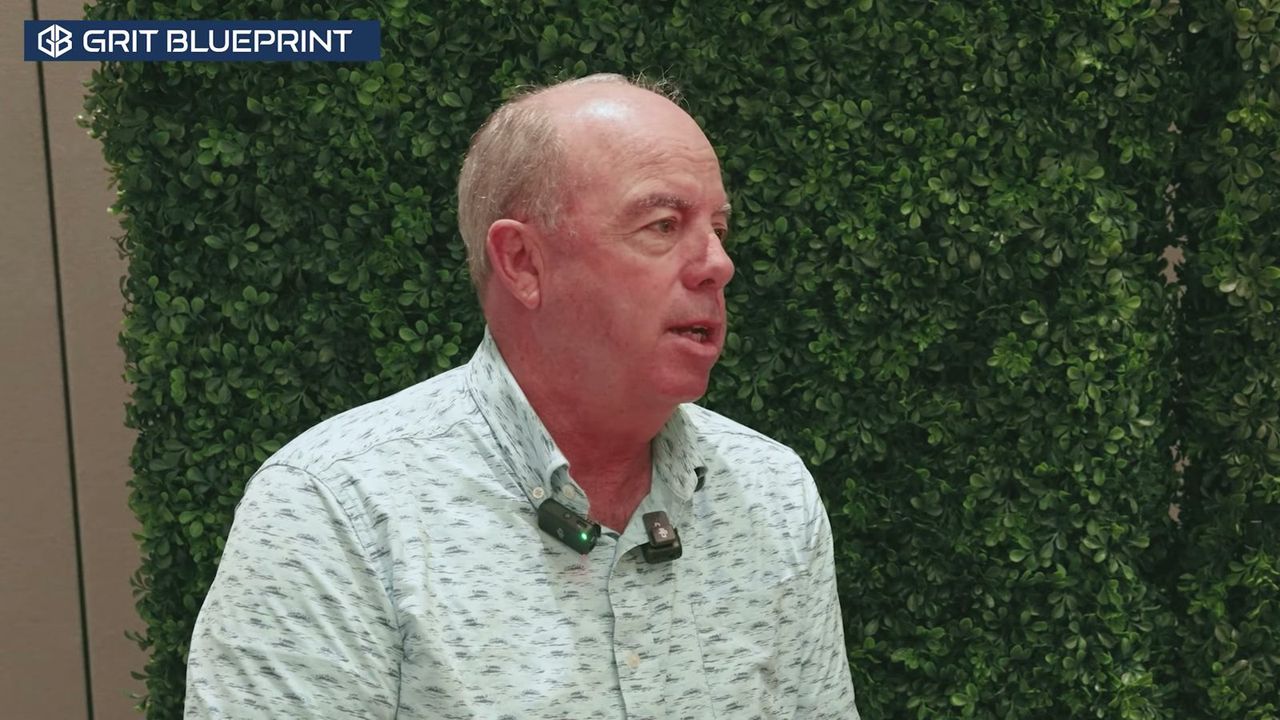
When customers already follow a brand, a store can borrow that following. Carry the brand, then tell people loudly that you have it. Matt Spinks is assistant manager of Lumber King in Danville, Kentucky. He did it with Milwaukee and Diablo tools in a red-floored power tool department he calls the Red Zone. He says it made the store known across the state as a place to buy Milwaukee.
Lumber King is a 100% employee-owned company and a member of Do it Best. Do it Best is a co-op, which independent stores join to buy together and share services. Spinks grew up in the lumber business and has been with Lumber King for about 13 years (24:39). Grit Guide talked with him at the Independent Home Improvement Conference. He was honored there as one of the young retailers of the year (2:33).
How do you grow sales without opening more stores?
Start with what customers already want and cannot find near you. Spinks says the question from his board and executives is how to reach a sales goal “without growing more stores” (27:39). His answer starts with how his own generation buys:
if your brand is clean, it looks good and I know that to a certain extent it’s going to be reliable because everybody I’m watching is using your product, I’m going to be your loyal fan.
 Matt SpinksAssistant Manager, Lumber KingFrom our interview, 27:39
Some brands spend heavily to build that loyalty, with advertising and a big following. For a store that carries them, Spinks says, “all you have to do is advertise that you have them” (28:26). His other example is YellaWood pressure-treated lumber: customers come into his store and ask for it by name (31:09).
How Lumber King built its power tool department
Spinks spotted a gap around Danville: “nobody around here carries Milwaukee, nobody carries Diablo, and it’s got this huge following” (32:04). Customers were driving a long way to buy those tools somewhere else. “They’re traveling Lord knows how many miles to go get it,” he says (32:43).
He knew the products as a buyer first. He had spent thousands of dollars of his own money on those power tools. He used that experience to decide what to stock (32:43). He built the department piece by piece, running on promotions from Do it Best and from Milwaukee. The look, with red floors, came from Ohio Power Tool in Columbus, Ohio. That small store grew into one of the biggest online power tool sellers of its time (32:04).
What happened to sales?
Spinks gave the numbers from memory of his store’s P&L, the profit and loss statement, and said they are not what the store grossed (33:38). In his words, the store’s “inside sales only tapped out at like a little over $10,000 in 2021.” In 2022, with Milwaukee and Diablo in for part of the year, “we were already over 70,000.” And: “In the last two years we’ve been considerably over 350,000” (34:19). He did not say exactly which sales the figures cover, so read them as one store’s direction in his 2025 telling, not as a benchmark.
Every Lumber King store now stocks Milwaukee. “As a company the last two years we’ve been right around a million dollars in Milwaukee as far as sales,” Spinks said in 2025 (34:43).
The building did not help. Spinks says the Danville store is a 1950s building that “does not scream hey, come shop here millennials” (34:19). The brand and the promotion did the work.
Carry it, then promote it
Stocking the brand is half of it. Spinks is clear that a shelf alone does nothing: “you don’t want to just like throw it on the shelf, just have it there” (28:26).
But as long as you actively promote it and work it, people are going to come to wherever that is.
Matt SpinksAssistant Manager, Lumber KingFrom our interview, 29:00He is careful with money, too. He says he has learned to be “very intentional about what you stock, what you sell, what you advertise” (9:12), and not to leave inventory dollars sitting on a shelf without making money. A dealer tracks that with inventory turns: how many times stock sells and is replaced in a year.
What happens when every store carries the brand?
The others catch up, and you keep working. “You look around the corner and everybody’s got Milwaukee now,” Spinks says, “but you still have to line up and put your pads on and play football” (33:23). Showing up still counts. He says people still come from across the state because they heard Lumber King was the place to buy Milwaukee.

Give customers one sentence to repeat about you
Lumber King became the place to buy Milwaukee. That is a sentence a customer can say to a friend. Most stores describe themselves with the same words: quality, service, great people. Those may be true, and nobody repeats them. If a customer cannot explain why your store is worth the drive, there is work to do.
A brand customers already follow can give you that sentence quickly, as long as you pick one move and do it fully: the right products, a space that looks like it means it, and promotion that tells people.
More activity only helps when it moves the right thing. And once the brand is in every store around you, the reason to come has to be your store. That means the people who know the tools, and the stock on the shelf when the customer comes in.
What to do next
- Ask your counter staff which brands customers ask for that you do not carry, and where those customers go instead.
- Check who carries that brand within a reasonable drive. Look for a gap like the one Spinks found.
- Ask your co-op rep and the brand’s rep which programs and promotions you can use to start.
- Build the area piece by piece, and give it a name people can repeat.
- Tell people you have it: on your signs, in your posts and at the counter. Then track that sales line every month.
For another store that picked where to win, read A Box Store Landed on Top of Him. He Picked Five Things to Win. To find out what your customers are already looking for, see Your Online Store Shows What to Put by the Front Door. For what a buying group does behind the scenes, read What a Co-op Does for an Independent Dealer.
This interview was recorded for an episode sponsored by Do it Best.
Questions people ask
How do you build a power tool department in a hardware store?
Start with brands customers already follow that nobody near you carries. Matt Spinks of Lumber King built his Red Zone piece by piece around Milwaukee and Diablo, using promotions from Do it Best and from Milwaukee, then promoted it.
Is carrying a popular brand enough to bring customers in?
No. Spinks says a shelf alone does nothing. You have to tell people you have it and keep promoting it, and once other stores carry the brand you still have to do the work.
Why do popular brands help a small store?
They have already built a following with their own advertising. Spinks says that for a store that carries them, all you have to do is advertise that you have them.
How much did Lumber King’s tool department grow?
In our 2025 interview Spinks said his Danville store’s inside sales were a little over $10,000 in 2021, over $70,000 in 2022 with Milwaukee in for part of the year, and considerably over $350,000 in the last two years. He gave them from memory of the store’s P&L, said they are not what the store grossed, and did not say exactly which sales they cover.
How do you avoid tying up money in new inventory?
Be intentional about what you stock and advertise. Spinks learned not to leave inventory dollars sitting without making money, and dealers track that with inventory turns.
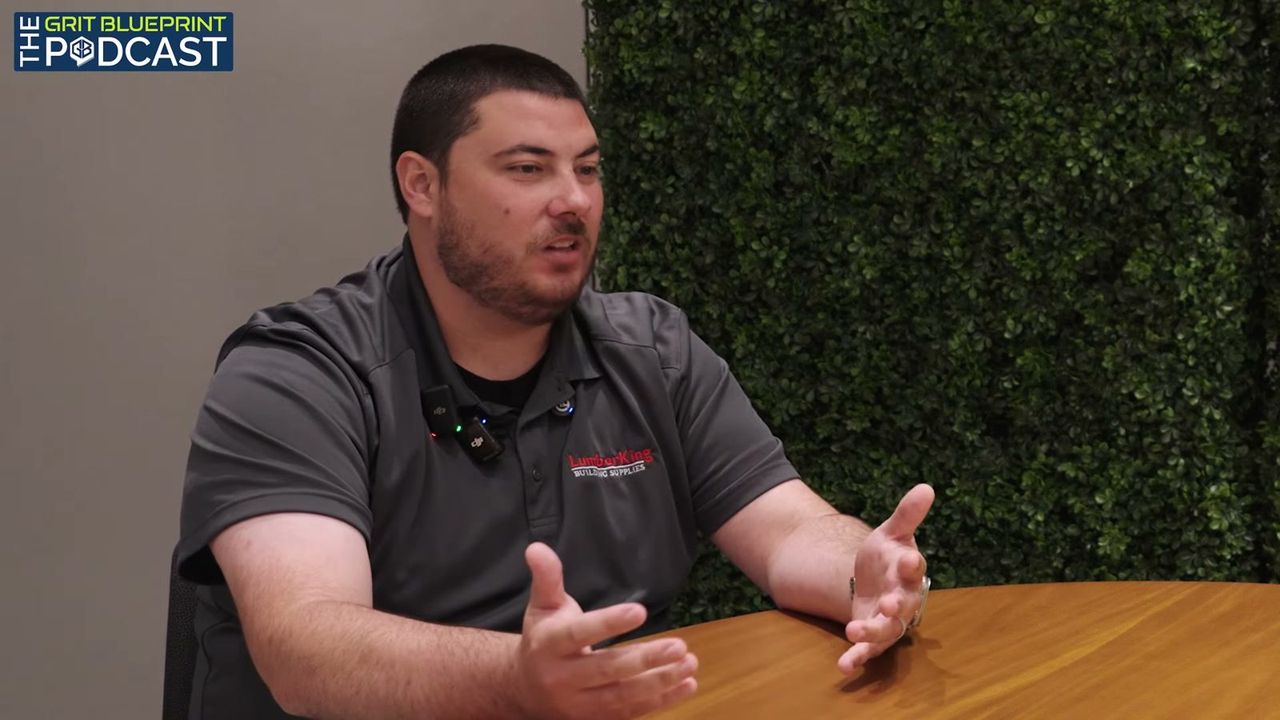
Watch the full interview
Building Better Brands Through Resilience: Lumber King with Matt Spinks. Times in parentheses mark where each quote sits in the audio episode.
Matt Spinks of Lumber King in Danville, Kentucky, saw his family's business close during the recession. He explains what that taught him about growth, leading without fear, and the Milwaukee Red Zone that took inside sales past $350,000.
A Grit Guide original. This piece is built from our own interview.
Sources
Sponsorship This interview was recorded for an episode sponsored by Do it Best.