Your Online Store Shows What to Put by the Front Door
A one-location store reads its website searches every week and moves product to match. Here is the routine.

Your online store’s reports show what customers are looking for before they walk in. Your hardware store merchandising can follow them. The products people search for and keep coming back to research go where shoppers see them first. Bryan Scott, who manages Southern Tool Supply, a single store with a lot of contractor customers, reads those reports every week. The product line people researched most now sits by the front door.
Once a week Scott opens the reports behind the store’s website.
“So what I’m looking for kind of on a weekly basis is I’m looking for what people are looking at,” he said (4:18).
What he does with the answer happens on the sales floor.
What should you read in your website reports each week?
Five numbers, in Scott’s routine:
- Recent searches: the words people typed into the store’s site.
- How many people searched for each thing.
- How often a product showed up in a search and got clicked.
- How often it was viewed in a cart.
- Page views against users: how many times a page was opened, and by how many different people.
The last one tells him the most. His example was Milwaukee Packout, a product line he said is always at the top of his list. Say it shows 52 page views from only 30 users. That means people are coming back to look again. Scott reads that as shoppers who are unsure and doing more research before they buy.
His response was to move the product. Packout now sits at the front of the store. It is on the right-hand side as you walk in.
How does website data change hardware store merchandising?
It tells you what to push by season and what to put side by side. It also tells you where things go when you rearrange the store. Scott gave an example of each.
By season. Last winter he could see how many people were looking at heaters and salt, and the store acted on it.
By neighbor. People looking at ratchets and wrenches are probably looking at sockets too, he said. So those go together on the floor.
By reset. A reset is a planned rearrangement of where products sit. Southern Tool Supply recently did its first one in 25 years, after going through a Do it Best retail training program that Scott described as a four-day class. What customers search for is one of the things he uses to decide where product goes.
The store’s website runs on the e-commerce system of Do it Best. That is the member-owned co-op the store buys through. Read more on what a co-op does for an independent dealer. Scott said the store used a different provider before and that the switch made things easier. He has a background in web design, and he said the reports take some learning for someone who is new to e-commerce. After that they are easy to read.
Does an online store help in-store sales?
Do it Best says it does, by a wide margin. Allison Flatjord is vice president of e-commerce and marketing at Do it Best. Her team tested what a member’s online store does for the physical one.
“We found that the in-store sales that come from an e-commerce platform are five to nine times the amount of sales that are actually done online,” she said (11:51).
What is reported and what is not
In-store sales that come from an e-commerce platform are five to nine times the sales made online. This is Do it Best’s own testing of its own platform, as described by Allison Flatjord.
How the test was run. She did not describe the method in the interview. Grit Guide has not seen the data.
She also described members who stayed out of e-commerce. They stayed out because their own customers did not shop that way. Then they put product online and the first big sale came in. Her example was a 5,000 dollar riding lawnmower. In her words, it showed them that “even if it’s not your existing customers that are buying online, there is a whole universe out there that is” (10:32).
The members who do best, she said, show their full assortment, feature the unusual things they carry (her examples were lobster pots and honeybee equipment) and tell their own story. Do it Best built the platform so each member’s “assortments, their brand feel, their pricing came through” (7:28).
The same habit, pointed at purchase history
Scott uses one more set of store data. He exports a customer’s purchase history and gives it to ChatGPT, an AI chat tool, with a question: looking at the last 12 months, what is this customer likely to buy in the next 30 days?
His example was a customer who has ordered 30 water coolers in past years. The answer goes to the outside sales rep. The rep goes to the customer and asks if they want them again. That may jog the customer’s memory, and purchasing can order the coolers in.
He checks the work. He has set up ChatGPT to show its sources. That way he can double check an answer before it goes to a customer, the owner or the staff. “Like I said, this is a tool. It’s not meant to do the job for you. It’s meant to help you with the job,” he said (19:09).
One caution from Grit Guide: customer purchase history is sensitive information. Check your AI tool’s data settings and your company’s rules before you upload it. One dealer’s rules are in start an AI committee, even if you run one store.

Your website’s search box tells you what to put up front
Every search typed into your website is a customer telling you, in their own words, what they came for. Treat that list the way you would treat the ten questions you hear at the counter every week. The answers belong where customers will look. That means the shelf by the door and the product page they read before they drive over.
The report cannot tell you everything, so ask. When a good customer comes in, ask where they looked first. Ask what they could not find. Then put that detail where they look. It is the same habit Scott has, pointed at people instead of page views. As Stefanie Couch said in the Do it Best e-commerce interview: “I think a lot of people think marketing is like logos and colors, and it is. … But there’s such a big part of it that is data focused” (4:03).
What to do next
- Ask your e-commerce provider where the search report is. Read it once a week, on the same day.
- For your most-viewed products, compare page views with users. Many more views than users means people are coming back to research. Put that product where they will see it first.
- Walk the store with the list of top searches. Check how long it takes to find each one from the front door.
- Look at what gets viewed together, and put those products together.
- Export one good customer’s purchase history for the last 12 months. Work out what they usually buy next, by hand or with an AI tool. Give the list to whoever calls on them.
Both interviews were recorded for episodes sponsored by Do it Best. Allison Flatjord works for Do it Best, and Southern Tool Supply is a Do it Best member.
Questions people ask
What website data should a hardware store look at?
Bryan Scott of Southern Tool Supply reads five things each week: recent searches, how many people searched for each thing, how often a product appeared in a search and got clicked, how often it was viewed in a cart, and page views against users.
What does it mean when page views are much higher than users?
The same people are coming back to look again. Scott reads that as shoppers who are unsure and still researching, so he puts that product where they will see it first when they walk in.
Is an online store worth it if my customers buy in person?
Do it Best says its own testing found in-store sales that come from a member’s e-commerce platform are five to nine times the sales made online. It did not describe the method in the interview. Allison Flatjord also said some members who doubted e-commerce got their first big online sale from people who were not existing customers.
Can AI tell me what a customer will order next?
Scott exports a customer’s last 12 months of purchases, asks ChatGPT what they are likely to buy in the next 30 days and gives the answer to the outside sales rep. He has it show its sources so he can check them. Purchase history is sensitive, so check your tool’s data settings first.

Watch the full interviews
Bryan Scott of Southern Tool Supply and Allison Flatjord of Do it Best. Company page: Do it Best Group.
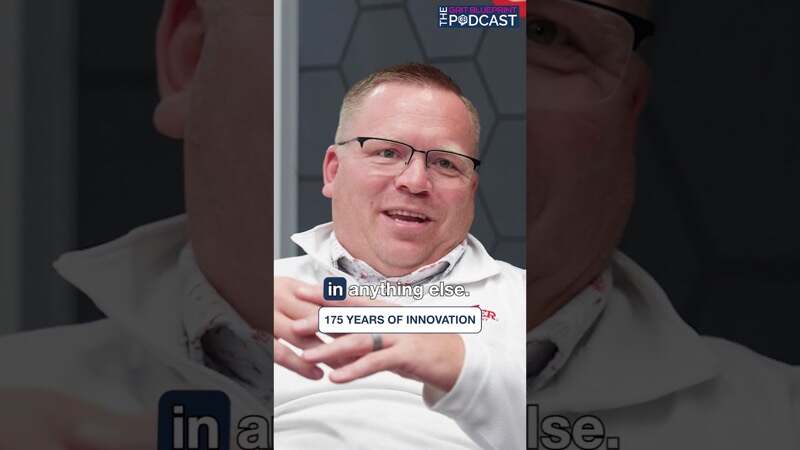
Bryan Scott, store manager at Southern Tool Supply, shows how a one-location store reads its e-commerce searches to decide what goes on display, and how he uses ChatGPT every day as a tool that helps with the job.
A Grit Guide original. This piece is built from our own interview.