How to Keep an Account Sold After the Order
Seven habits for the weeks after the yes, so the customer hears from you before they have to ask.
You’ll finish with A one-page order log for each open order: what was approved, who the customer calls, the date of the next update, what happened at delivery and what the customer is building next.



Download the PDFPDF, 724 KB, 9 pagesDownload the slidesPDF, 409 KB, 14 slides
In this guide7 steps
You’ll finish with A one-page order log for each open order: what was approved, who the customer calls, the date of the next update, what happened at delivery and what the customer is building next.
- Step 01Confirm the order the day it is placed
- Step 02Name the contact and set the update day
- Step 03Call first when the news is bad
- Step 04Call when the news is good, too
- Step 05Check in after the delivery
- Step 06Fix what is open before you ask for more
- Step 07Ask about the next job and write down what you learned
From the episodeThe Real Reason Customers Buy Again
From the episodeThe Real Reason Customers Buy Again
Seven habits for the weeks after the yes, so the customer hears from you before they have to ask.
Michael Tull has a name for the work that starts after the customer says yes. He calls it “keeping it sold.”
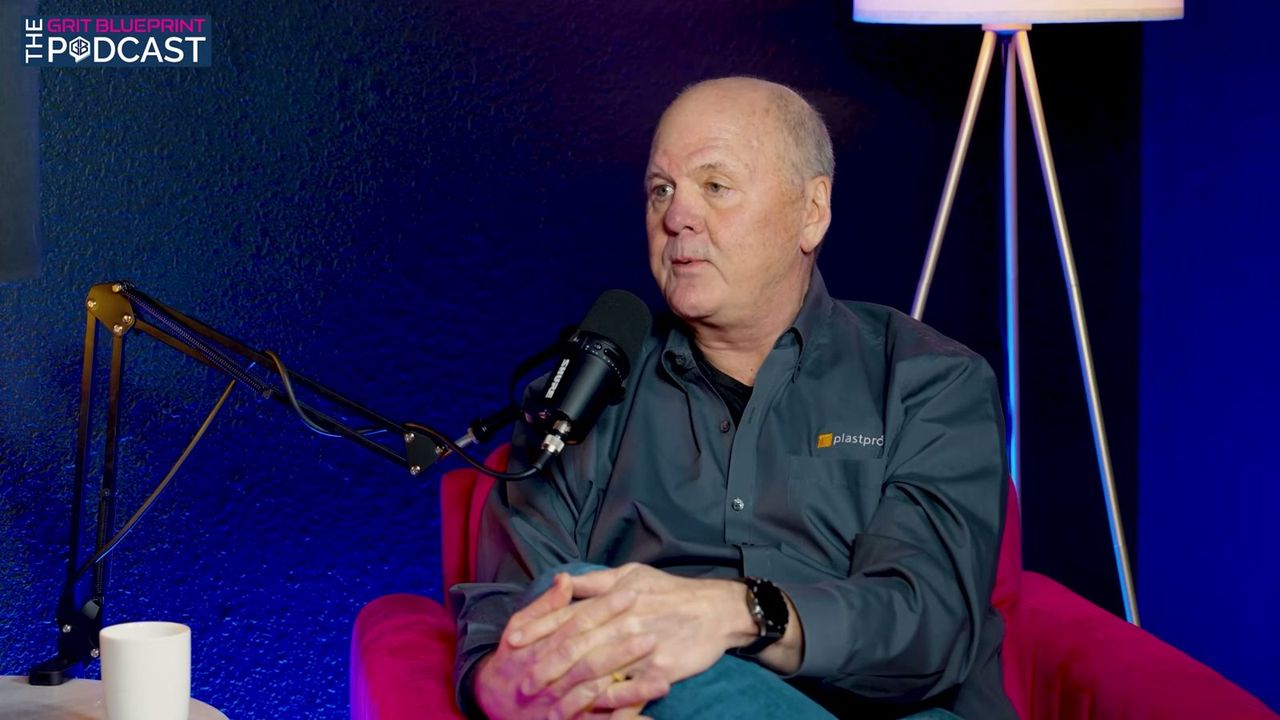
Michael has been in the door business for fifty-five years. He runs Tull Sales as a manufacturer’s rep, a salesperson who represents manufacturers in a territory. On the Grit Blueprint Podcast he explained how it works: “The way you keep things sold is you do what you say you’re going to do.”
Then he gave two examples that point in opposite directions. If the plant is running behind, you call the customer and say so. If there is a week when you can get ahead, you call and tell them to use it. Both times the customer hears it from you first.
This guide turns that into seven steps. It is for inside and outside salespeople at dealers and distributors, and for reps. It fits special orders best. A special order is a product your company does not stock. Your company has to order it from the manufacturer for one job.
- The approved quote, with its date or version number
- The name of the person at your company who handles order and delivery questions
- A way to check the order’s status with your supplier
- Your company’s rule on credits, returns and replacements, so you know what is yours to promise
- A calendar you really look at
Step 1: Confirm the order the day it is placed
Before the day ends, send the customer a short note. Say which quote version they approved, what it covers and what happens next. Then check that your own team is ordering from that same version.
Write down what kind of yes you have. A verbal yes, an approved quote and a purchase order are three different things. A purchase order is the customer’s written order. Follow your company’s payment and order-release process before anything goes to the supplier. To release an order is to tell the supplier to go ahead.
Step 2: Name the contact and set the update day
Tell the customer two things. Say who to call about the order or the delivery. Say what your next update will cover and when it will come.
“I will check with the plant Tuesday and text you by noon” is a promise you can keep. “I will keep you posted” is not a promise at all. Keep your promises small enough to keep and clear enough to check. Put the update on your calendar before you do anything else.
Step 3: Call first when the news is bad
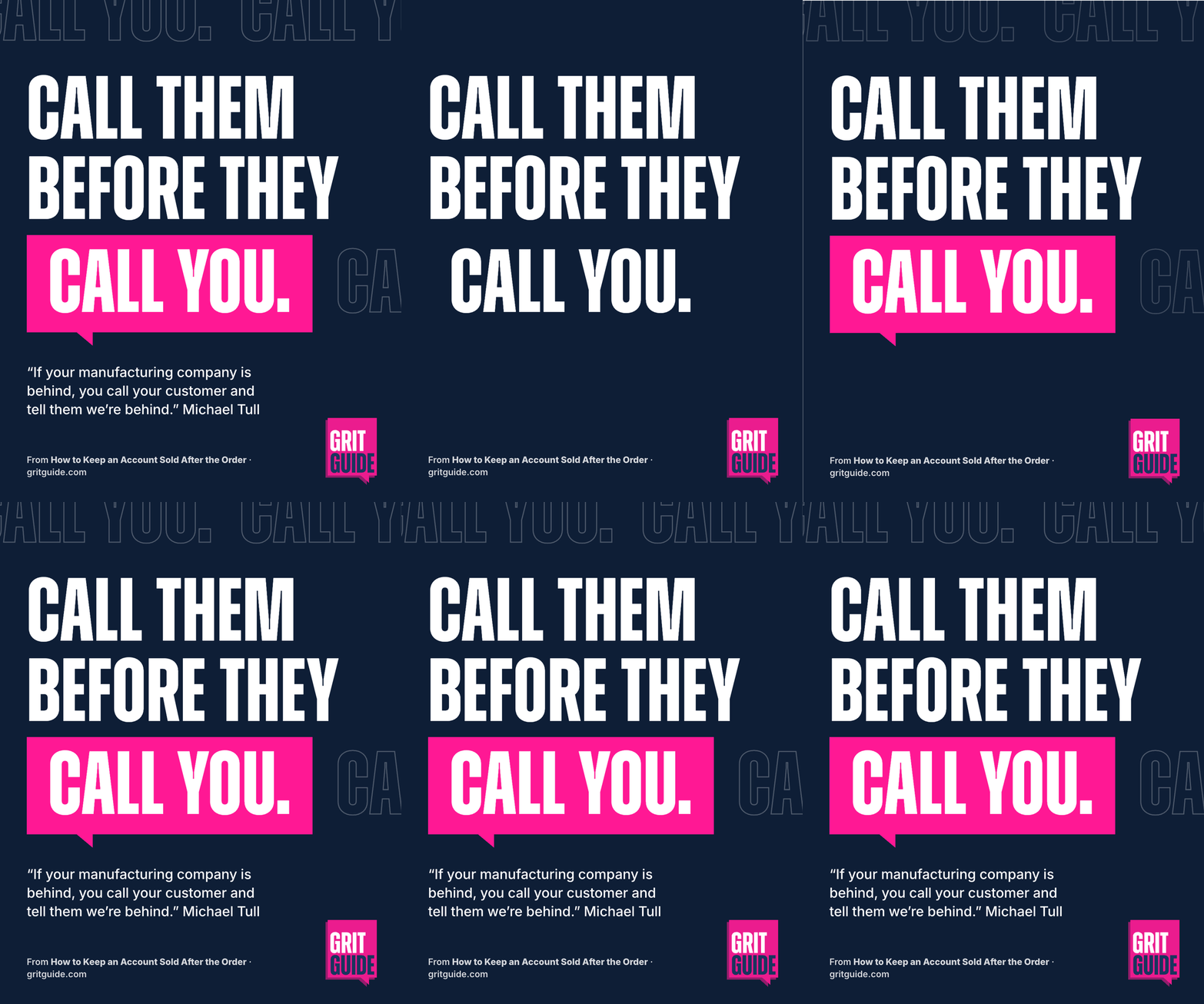
This is the heart of it. When the plant is behind, the customer should hear it from you before they have to call and ask. Michael’s words: “If your manufacturing company is behind, you call your customer and tell them we’re behind.” Have the hard talk up front. If the band-aid is coming off, pull it.
Say what you know, who is working on it and when the next update will come. Do not give a new date until your supplier has confirmed it.
Step 4: Call when the news is good, too
Michael’s other example is the fun one: “If you’ve got a week where you can jump ahead, you call them and say I’d encourage you to do this this week, because we have an advantage right now.”
Open time at the plant, a shorter lead time, a product back in stock. Lead time is how long an order takes to arrive. If the news helps this customer’s job, pick up the phone. Make sure it is true before you say it. Never use a deadline you have not checked or a made-up shortage to hurry an order.
Step 5: Check in after the delivery
The sale is not over when the truck pulls out. Ask if the package arrived the way they expected and if anything needs attention. Make sure they know how to report a problem.
If something is wrong, get it to the right person and tell the customer when they will hear back. Do not promise a credit, a replacement or a fix that is not yours to give.
Stefanie Couch writes that every product has a bad day. Something gets damaged in shipping. Something does not fit. What matters is how you respond. Fast, helpful and easy to work with keeps a contractor. Slow or defensive sends them to someone else.
Learn more from Stefanie Couch: Why Contractors Will Control Your Revenue in 2026 (And What to Do About It)
Step 6: Fix what is open before you ask for more
Look at the account before your next sales call. Is anything unresolved? A damaged piece, a missing part, a question nobody answered? Handle that first. An open problem on this order deserves your attention before a pitch for the next one.
Small things count here. Nick Talarico of Do it Best Group tells a story about a store associate. The associate spent 20 minutes helping him with a small replacement part for a dripping shower head. The store made almost nothing on it. Talarico bought other things on the way out. “People want to know that they’re noticed,” he said. Watch the interview
Step 7: Ask about the next job and write down what you learned
Now ask. Use the last line of the second script below.
Then write down what this order taught you about the account. Note what they prefer, who decides and what they order again and again. Next time, check before you copy the last order. Confirm that the new job really has the same needs. A repeat customer still deserves a fresh look.
Finish line
You should now have: A one-page order log for each open order: what was approved, who the customer calls, the date of the next update, what happened at delivery and what the customer is building next.
Two scripts
Use it when: an order is going to be late.
“I have an update on [order], and it is not the one I wanted. [Supplier] is running behind. Here is what I know: [fact]. Here is what I do not know yet: [open question]. [Name] is working on it, and I will call you [day and time] with a confirmed date. What does this do to your schedule?”
Use it when: the delivery has landed.
“Hi [name]. Did [the order] arrive the way you expected? Is there anything we need to look at? If there is, I will get it to the right person and tell you when you will hear back. And what is coming up next? Is there a selection or a lead-time question we should work through earlier this time?”
Michael tells it at 23:35 in The Real Reason Customers Buy Again.
Checklist: keeping it sold: order log
Tick these off as you go. Any box you can’t tick is the step to go back to.
0 of 9 ticked
You’re done when
- Every open order has a named contact and a date for the next update.
- The log shows the customer heard about each change from you before they asked.
- The delivery check is written down, with what the customer said.
- Each open problem has a name and a date.
- The account notes say what the customer is working on next.
What to do next
For more wording you can copy, open the Customer Follow-Up Scripts. If your notes from a jobsite visit are a mess, this AI prompt turns visit notes into a follow-up email.
Episodes in this piece
Take it to your team
The whole guide as a PDF to print or keep, and slides to walk your team through it, one step at a time.
Download the PDFPDF, 724 KB, 9 pagesDownload the slidesPDF, 409 KB, 14 slides
Sources
- The Real Reason Customers Buy Again (Grit Blueprint Podcast, Michael Tull with host Stefanie Couch) Grit Guide
- Why Contractors Will Control Your Revenue in 2026 (And What to Do About It) Stefanie Couch, Grit Blueprint
- Independent Retailers Need Better Data. Do it Best Has The Tools. (Grit Blueprint Podcast, Nick Talarico with host Stefanie Couch) Grit Guide