The 85/15 Rule: Check AI’s Work Before a Customer Sees It
Mark Blickenstaff of Moore Lumber and Bryan Scott of Southern Tool Supply on checking AI before an answer leaves the building.

Here is how to check AI answers before they reach a customer, the way Moore Lumber and Hardware does it. Expect the tool to get about 85 percent right. Plan for a person who knows the product to spend time on the other 15 percent. Two habits make that check quick. The tool cites a source for every answer, every time. The person checking looks at the source before anything goes out.
Moore calls it the 85/15 rule. Here is how it works there. You will also see how a one-store manager in another state does the same thing at his counter.
What is the 85/15 rule for AI?
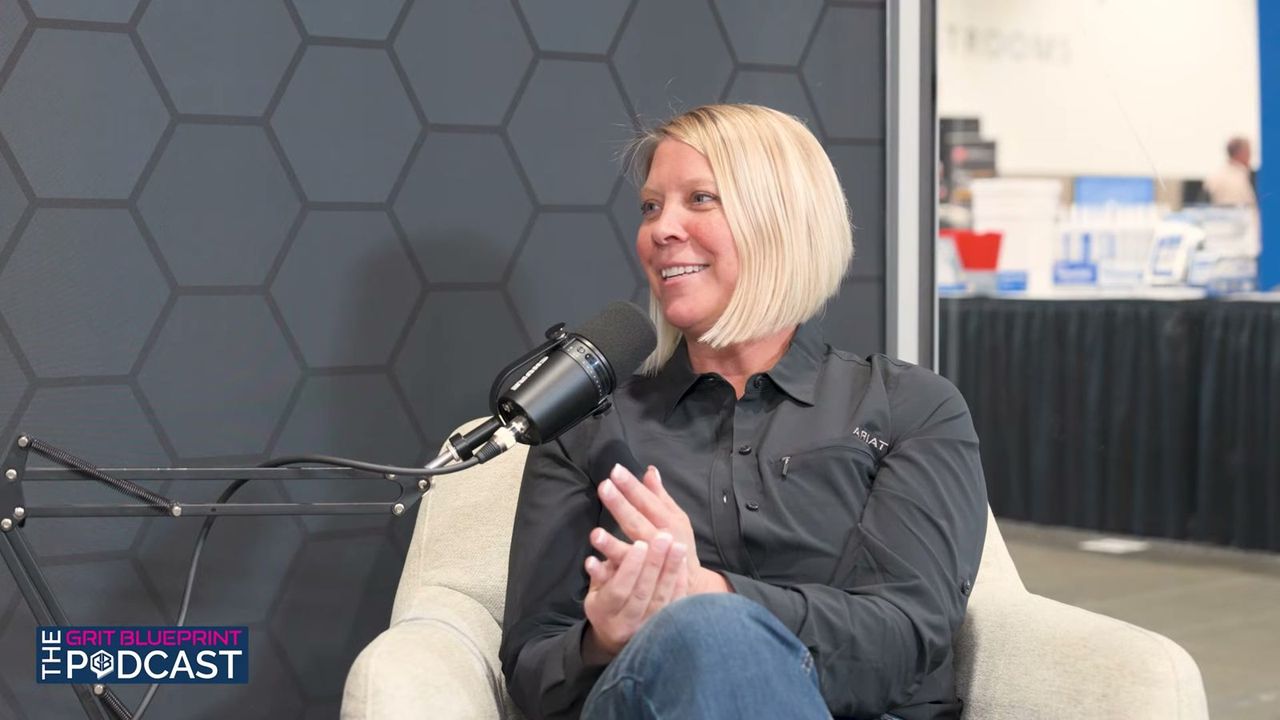
It is a split of the work between the tool and your people. Mark Blickenstaff is Divisional Director of Revenue, Growth and Marketing at Moore Lumber and Hardware. Moore opened in Bailey, Colorado, in 1947 and now has seven stores.
He was asked on the Grit Blueprint Podcast how Moore keeps AI from handing out bad product information. The question was a dealer’s real worry. A store sells one decking line, and the AI pulls its answer from a competitor’s line. He answered with a number.
It’s 85 percent correct. 15 percent of it’s still gonna require your time, energy.
 Mark BlickenstaffDivisional Director of Revenue, Growth and Marketing, Moore Lumber and Hardware (24:58)
Moore has always worked with 80/20 rules, he said, so getting 5 percent more suited him fine. The point of the number is planning. Nobody at Moore treats an AI answer as finished.
How to check AI answers: who owns the last 15 percent?
The people who already know the product. “We rely on our people having the knowledge and going oh, that doesn’t smell right. Let me go back to that one,” Blickenstaff said (24:58).
His favorite example for a sales team is the technical document. A customer asks a question, and the answer is one sentence somewhere in an 18-page product document. Put the document into the AI and ask the question. “Review this document, tell me what the specific gravity is. Ok, your answer is there in 30 seconds,” he said (41:23). Specific gravity is a density figure, the kind of number buried deep in a spec sheet.
The host added the step that makes the answer checkable: ask the tool to show the page it came from. Then the rep can open that page, confirm it and send the customer a screenshot of it.
How do you make AI show its sources?
Put it in the tool’s standing instructions so nobody has to remember to ask. At Moore it is automatic. “We tell it to cite everything so that when it does kick something out, it’s like okay, well, that came from Wikipedia, let’s go check that one,” Blickenstaff said (25:30). Moore requires the citations so its team and its customers know where an answer came from.
Bryan Scott runs the same habit in a much smaller shop. He manages Southern Tool Supply, a single store with a lot of contractor customers, and uses ChatGPT every day. He set it up to give him sources with every answer. His example is a question a tool counter hears all the time. What size drill bit goes with a given tap?
I want it to be able to give that to me but then also give me the sources so I can double check it.
 Bryan ScottStore manager, Southern Tool Supply (10:40)
The reason is the person on the other side of the counter. Checking the source lets him be “confident in passing that information along to customers,” he said (10:51), and to the owner and the rest of the staff.
Where should company information go, and where should it not?
Blickenstaff puts Moore’s P&L into ChatGPT. A P&L, or profit and loss statement, is the monthly report of sales, costs and profit. He asks for a summary, what went up and down, and ideas for cutting controllable costs. He says he gets back something like a 10-page document. He does two things before any of that.
First, he pays for the tool and turns off the setting that lets it use what he uploads. “So my P&Ls do not go to the world,” he said (31:09).
Second, he keeps two logins. “I have one that uploads and downloads, and I have one that never uploads and only downloads,” he said (31:09). The second one, in his words, will “stay local to me only” (31:54).
That is how he set up his own account in 2025. Plans and settings change. So check your tool’s current privacy settings and terms before anyone uploads a financial report or a customer list.

Name the person who checks the last 15 percent
Every AI job in a store has a last 15 percent, and it belongs to a person. Moore’s rule works because the checkers are product people, the ones who can tell when an answer doesn’t smell right. Before you hand a job to AI, write down who checks it and what they check: the spec against the page, the price against your system, the customer and job details against the order.
Give the tool the goal, the context and the limits, then challenge the answer and check the claims. The tool can take on more than your team has hours for. The judgment stays with your team.
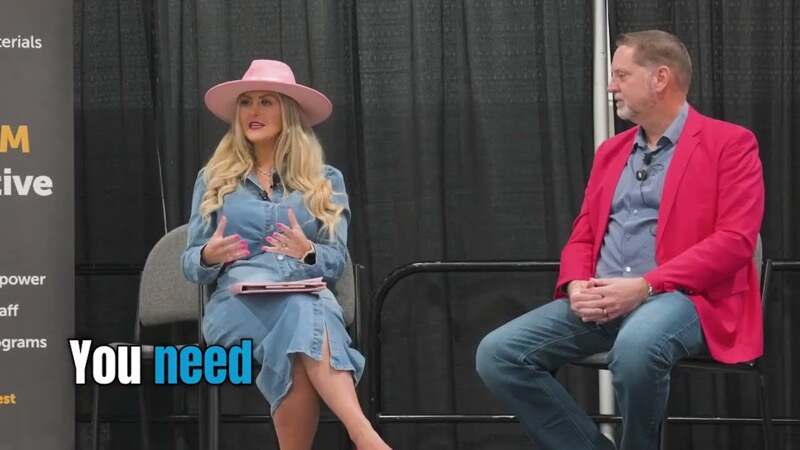
Stories are where tools get into the most trouble. Stefanie Couch, who hosts the Grit Blueprint Podcast, warned a room of dealers about it at the Do it Best Market in Orlando: “One thing with AI is sometimes it will still make stuff up. It’s like a phantom truth” (35:20). Ask a tool to describe a time you helped a customer. If it does not have the real story, it will write a beautiful fake one. Give it the real job, the real customer and the real result, or write that part yourself.
Writing these rules down is the first job of an AI committee. See how Tal Building Centers wrote its first two AI rules.
What to do next
- Pick one AI job your team already does. Write its 85/15 next to it: what the tool drafts, and the name of the person who checks the rest.
- Add one line to the tool’s standing instructions: cite the source for every fact, with a link or a page number.
- For any spec, code or warranty answer going to a customer, open the cited page and check it before you send it.
- Before anyone uploads a P&L or a customer list, move to a paid plan. Turn off the setting that lets the tool learn from your files, too. Settings change, so check them again every few months.
- Never ask AI for a customer story it does not have. Give it the facts, or keep that part human. To set up AI for one job at a time, see how to give AI your store’s knowledge.
The Southern Tool Supply interview was recorded for an episode sponsored by Do it Best.
Questions people ask
What is the 85/15 rule for AI?
It is Moore Lumber and Hardware’s rule of thumb: an AI answer is about 85 percent correct, and the other 15 percent needs a person’s time before it is used. Mark Blickenstaff says the people doing that check are the ones who know the products well enough to spot an answer that is off.
How do I stop ChatGPT from making things up?
You cannot rule it out, so make every answer checkable. Moore Lumber and Southern Tool Supply both set their tools to give a source with every answer, and a person opens the source before the answer goes to a customer. For stories and examples, give the tool the real facts instead of asking it to come up with them.
Can I put my P&L into ChatGPT?
Mark Blickenstaff does, on a paid account with the upload setting turned off, and he keeps a second login that stays local to him. That is his own 2025 setup. Check your tool’s current privacy settings and terms before anyone uploads financial reports.
Who should check AI answers at a lumberyard or hardware store?
The person who knows the product or the customer. At Moore it is the salespeople who know the lines; for a price it is whoever owns pricing. Write the checker’s name next to each job you give AI.
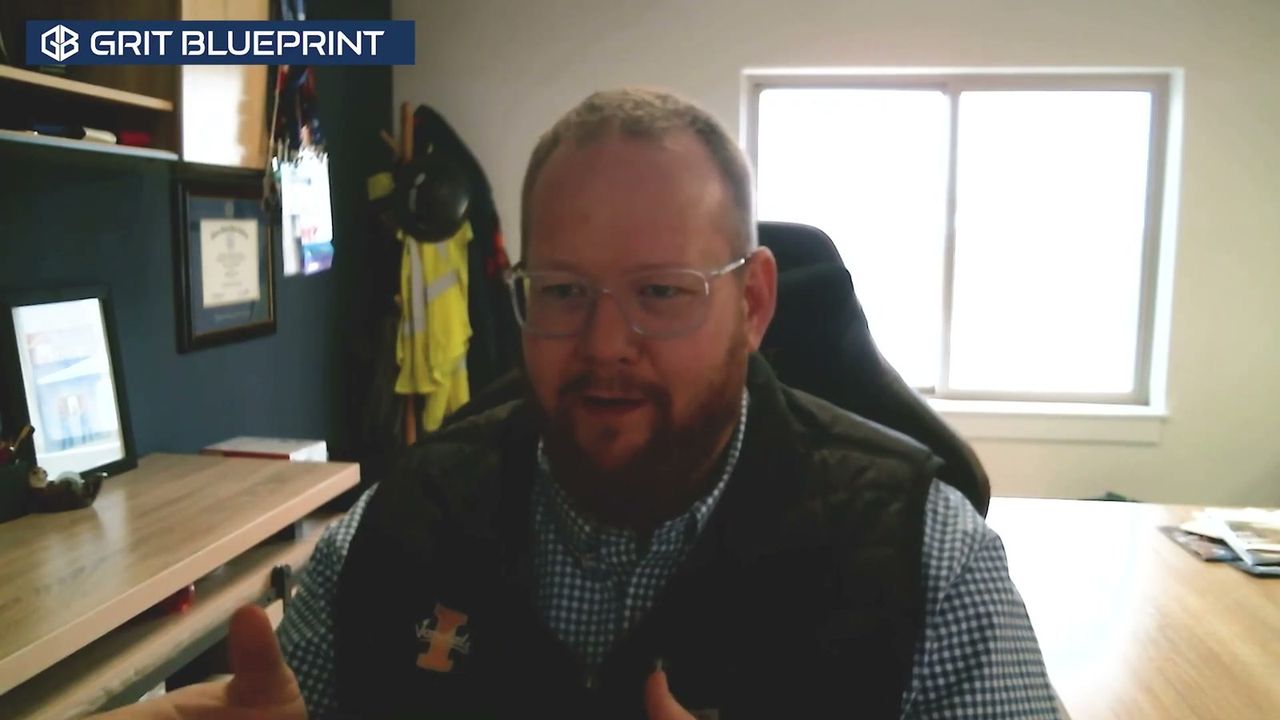
Watch the full interviews
Mark Blickenstaff of Moore Lumber on AI at an independent lumberyard and Embracing AI in Small Business: Southern Tool Supply. Stefanie Couch’s full session is The AI Blueprint for the Building Industry.
Mark Blickenstaff of Moore Lumber and Hardware shows where a seven-store Colorado lumberyard puts AI to work: a text-to-order paint agent, P&L reviews, marketing plans and technical documents. His rule is 85-15, meaning the tool is 85 percent right and people check the rest.
A Grit Guide original. This piece is built from our own interview.