Ask Your Newest Hire Why: How DCI Group Collects Ideas From the Floor
Amber Deimler, vice president of sales at DCI Group, on the day-one invitation, the QR codes and the customer stories her 90-person company uses to get ideas from the people doing the work.

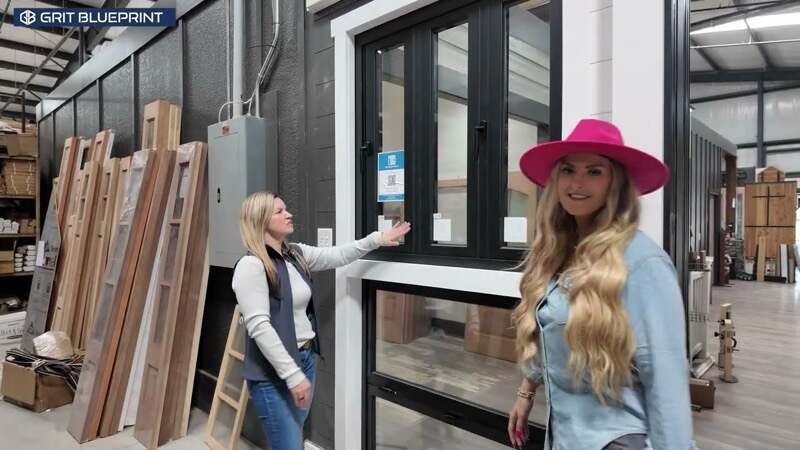
One of the simplest ways to get ideas from employees is to ask the newest ones what looks wrong. At DCI Group, the first thing a new hire hears is to look hard at the process, and “if you’re asking yourself why, bring it to me,” says Amber Deimler, the company’s vice president of sales (22:16). DCI also puts QR codes around its shop so anyone can send in a safety fix or an idea, and it pays a bonus when an idea gets used (41:23).
DCI Group had about 90 people when she spoke to us in 2024 (44:48). It had three divisions: Demountable Concepts, Inc., MyGlassTruck.com and DCI Fleet Service. Among other things, its glass department builds racks that customers mount on their vans (44:48). Deimler explained how the company collects ideas on the Grit Blueprint Podcast.
Who is Amber Deimler?
She started in medical device sales as a customer service rep and moved into sales. Then she spent five years at Enterprise. She worked in car rental, truck rental and fleet leasing (2:28 to 2:58). She met DCI’s president on a sales call.
He told her he did not know if he needed what she was selling. But he said they should keep the relationship open (5:06). About eight to ten months later he called with a job (2:58). At the time of the interview she had been there six years (3:29).
Why ask new hires to question the process?
Because they have not yet learned to stop seeing the problems. Deimler’s pitch to a new hire is that “your fresh set of eyes on this process” can help DCI improve its standard procedure, the written way a task is supposed to be done, “because you’re coming in with like no knowledge of what this is supposed to be” (22:16).
She knows it is hard to speak up in your first weeks somewhere. That is why the invitation comes on day one, from a leader: “if you’re stumbling over something, you have to let us know” (22:46).
Different jobs see different things, too. DCI’s engineers tease the sales team about every request that starts with “all you got to do is” (23:04). In Deimler’s telling, the engineers’ line is “oh, great, another all you got to do is project.” Her point: “everyone’s brain works differently” (23:04).
How do you collect ideas from the shop floor?
Make it easy to send one, answer every one and reward the ones you use. DCI put QR codes, scannable from a phone, around the shop. People use them to send safety recommendations and “recommendations of things they’re stumbling over” (41:23). Then, Deimler says, “It goes on the list, it’s addressed. And if an idea is implemented, we give them a bonus related to the great idea that was implemented” (41:23).
The order matters. The idea goes on a list, it gets addressed, and a used idea earns a bonus.
Why give every job a number?
Ownership is the reason behind all of it. DCI found a measure for every employee that the person can control. When lead times ran long and had to come down, the glass department’s number became small racks out the door in a week, with a goal of 40 and a small bonus when the team hits it (40:22). Lead time is how long something takes from the day it is ordered to the day it arrives.
The press brake operator, who bends sheet metal, is measured on the parts he supplies to the other divisions. Engineering counts projects. Accounting watches payables and receivables (40:48 to 44:21). A number alone is not enough, Deimler adds: “You can’t just give someone a number, just show them how to get there” (41:57), and train them until they see they can. For more on one goal everyone understands, see how to make sure every employee knows the goal.
How do you show people their work mattered?
Tell them the customer’s side. Deimler pushes her sales team to go down to the glass department after a good week and tell the crew about one customer “who was so happy because he got his rack in time to put it on his van and go pick up a job he wouldn’t have been able to do” (44:48).
Ownership shows up in small jobs, too. At Enterprise, Deimler worked an airport location with a fridge of bottled water for customers in the lobby. Restocking it was not her job. She did it anyway, because the customers in the lobby were all of theirs to look after: “it doesn’t matter who restocks the fridge” (42:45).
When should a leader have the hard conversation?
Early. Ideas from the floor sometimes mean telling someone their way is not working, and Deimler has learned not to wait. “When you let things fester,” she says, “the conversation when it actually happens is just filled with emotion” (1:09:04 to 1:09:14). Wait too long and “sometimes you can’t come back from the big thing but you could have come back from just the little conversation” (1:09:37).
She calls it healthy conflict, and treats it as part of managing people: “It’s okay to agree to disagree” (1:05:15).

Ask the new hire what looks wrong
Stefanie Couch, who hosted the episode, compared it to a smell you stop noticing: “I’ve been in this room for a year and I don’t smell this, but you walked in and you do, it’s the same thing with a business” (39:49).
When the same problem keeps coming back, ask the people doing the work before you change it. Question the habits that slow the team down. Expect everyone, new or not, to raise missing information and blockers. Then test the change, explain what changed and why, and decide what to keep. Deal with problems while they are small. DCI’s day-one invitation, its QR codes and its customer stories are a working version of that in a 90-person shop.
What to do next
- Add one line to every new hire’s first week: if you find yourself asking why we do something this way, tell me. Ask them again a few weeks in.
- Set up one easy way to send in ideas and safety fixes from the floor. DCI uses QR codes people scan with their phones.
- Give every idea an answer. Decide ahead of time what someone gets when their idea is used.
- After a good week, tell the crew one customer story that came from their work.
- Have the conversation you have been putting off this week, while it is still small.
For a new hire’s side of it, see your first 30 days at a building materials dealer. For owning the outcome as a leader, see the Extreme Ownership lesson.
Questions people ask
How do you get ideas from employees?
Make it easy and answer every one. Amber Deimler of DCI Group says her company asks every new hire to bring any process that makes them ask why, puts QR codes around the shop for ideas and safety fixes, and pays a bonus when an idea is implemented.
Why should new hires question the process?
Because they see it without the habits the rest of the team has built up. Deimler says a new person’s fresh set of eyes can help improve a standard procedure because they come in with no idea what it is supposed to be.
What should a company do with an employee’s idea?
At DCI Group, the idea goes on a list, it gets addressed, and if it is implemented the person gets a bonus related to the idea. Deimler also has her sales team tell the shop the customer stories that come from their work.
What is a lead time?
How long something takes, usually from the day it is ordered to the day it arrives. DCI set its glass department a weekly goal of 40 small racks when lead times ran long and had to come down.
When should you have a difficult conversation at work?
Early, Deimler says. When you let things fester, the conversation is filled with emotion when it finally happens, and sometimes you cannot come back from the big thing when you could have come back from the small conversation.

Watch the full interview
Fostering Internal Entrepreneurship Drives Growth, with Amber Deimler of DCI Group. Time stamps are from the podcast audio.
Amber Deimler is Vice President of Sales at DCI Group. She explains how a 90-person company gives every employee a number to own. She also explains how women in sales can handle pushback, perfectionism and people pleasing.
A Grit Guide original. This piece is built from our own interview.