How Buying an Established Business With an SBA Loan Works
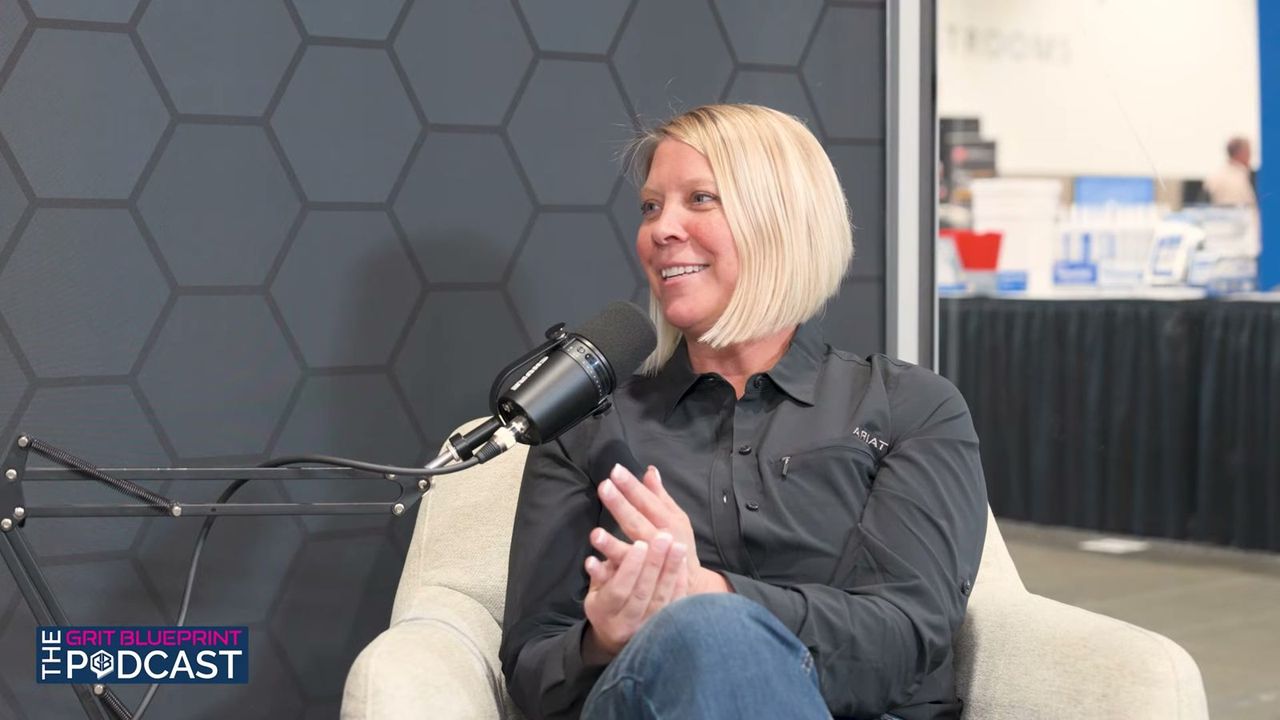
Deb Curtis spent years as a business banker and SBA lender. Then she became a business acquisition loan consultant. Here is the process as she described it.
For educational purposes only: general information, not legal, tax, financial or safety advice. Check your local codes and talk to a qualified professional before you act. Disclaimer

An SBA loan to buy a business works like a mortgage on a house, with one big difference. The business you buy already earns the money that makes the payment. Deb Curtis is a business acquisition loan consultant and former SBA lender. She says that difference is why banks will finance a proven, profitable business they would turn down as a startup.
The buyer brings good credit and cash savings. The lender checks the seller’s tax returns. The seller stays for a while to hand it over.
This is how Curtis described the process on the Grit Blueprint Podcast in April 2024. Loan sizes, guarantee levels and SBA rules change, so check the current rules with a lender, and talk to your own accountant and attorney before you sign anything.
Who is Deb Curtis?
Curtis spent 18 years at a consumer finance company, much of it on auto loans. There she learned to read tax returns and judge what a borrower could afford. She moved into business banking, managed a commercial loan portfolio and became an SBA lender at several banks. Over time she narrowed her work to one kind of loan: financing people who buy established businesses.
What is an SBA loan?
It is a bank loan that the U.S. Small Business Administration partly guarantees. The SBA does not hand you the money; your lender does. The guarantee covers part of the lender’s loss if the loan goes bad. In Curtis’s words in 2024, “if the loan goes bad, the government will guarantee that loan up to 75%” (12:49). She saw banks say no to a business loan on their own and yes once the guarantee was behind it.
Every lender sets its own credit policy on top of that, she says, from the biggest national banks to community banks, credit unions and non-bank lenders. So “you could apply for an SBA loan at all those different various institutions I just mentioned and hear a different answer” (14:16). Her advice is to start with the bank you already use. If that goes nowhere, a commercial loan broker can shop the request for you, for an upfront fee, which she considers fair for the search they do (15:43).
Why do lenders prefer an established business to a startup?
Because the money is already proven. The bank’s due diligence is the check of the seller’s records before the loan is approved. When you buy an established, profitable business, Curtis says, that check uses the IRS tax returns. The returns show, she says, that the business makes enough to cover the loan payment and pay the new owner a salary. That holds if the buyer keeps doing what the founder does (26:16 to 28:22).
Startups were a different story at the banks she worked for. “The startups, the banks constantly said no, no, no,” she said (32:04). In her experience they were among the most delinquent accounts in bank portfolios, the ones struggling to pay in years two, three and four.
She describes buying an established business, with a seasoned team already running it, as “like a career employment promotion to CEO” (27:24). She points to people who have learned management, customer service and people skills in a corporate job. She says they are strong candidates to take over businesses whose owners are ready to retire.
How does the process start?
With the buyer. “I have a business buyer profile document that I have you fill out,” Curtis said (38:12). It covers two things: the buyer’s goals and the buyer’s credentials. Just as with a house, she says, you will not buy a business with bad credit and no cash savings for a down payment, and these loans are larger than a home loan for most people.
The loans she places come from SBA 7(a) lenders, the SBA’s main loan program. “They deal with loan sizes from 500,000 up to 5 million,” she said in 2024 (39:14). Smaller purchases, such as a business selling for $80,000, go to SBA Express lenders, and she refers those buyers elsewhere. Her sweet spot for a first-time buyer is $500,000 to $2 million. Above that, she says, banks get “gun shy on an uncollateralized loan” (39:54). Collateral is property the lender can claim if the loan is not repaid. Larger deals do get done, she says, but both buyer and seller need strong credentials.
What a buyer gets in that range, as she described it: established businesses that pay the owner a salary of $100,000 to $250,000 and still have enough free cash flow to make the loan payment (40:24).
How long does the seller stay after the sale?
Long enough to hand it over, and you negotiate how long. Curtis said in 2024 that the SBA allowed the seller to stay and help the buyer transition for up to 12 months. “Typically, what I see negotiated is 60 to 90 days,” she said (43:58). A common setup is a couple of weeks on site, then calls as needed and a visit if something needs fixing. If a seller wants to leave the day after closing, she sees red flags.
Sellers usually pick their buyer and like them, she adds. They want the business to keep going.
Why do some businesses for sale never get financed?
Because the tax returns do not show the profit. Buyers can find listings on sites like BizBuySell and through business brokers. But Curtis warns that “a lot of the listed businesses do not qualify for bank financing” (45:57), because the owners did not report their profits for years. When the returns do not show enough cash flow to support the buyer’s loan, she says, a business can stay “listed forever” (46:42).
That is the seller’s side of the same deal. If you own the business, see how to get a hardware store ready to sell.
Many businesses never get listed at all. Curtis’s advice comes from her father, a fisherman who asked the bait shop owner where the fish were biting. The lesson: nose around and ask questions. If you are a regular customer of a business you love, ask the owner about their plans. “If you don’t ask questions, you’re not gonna catch any fish, all you’re gonna catch is a sunburn,” she said (53:00).

Pay an expert and skip the ignorance tax
Stefanie Couch hosted this episode. She has a name for the cost of learning something the hard way: the ignorance tax. Buying a business is a place where it gets expensive fast. Curtis’s picture of doing it alone is applying to ten lenders and getting nine no’s before one yes (15:43). Couch’s advice on the episode was to work with someone who has already paid that tax: “If you can speed up the process by going with an expert, it’s always a good thing, in my opinion” (16:43). “Ignorance tax is real,” Curtis answered (17:38).
Build support around what you are not good at, instead of carrying everything yourself. For someone coming from a corporate job, that means a lender or loan consultant who knows acquisitions. It also means an accountant who reads small business tax returns and an attorney who has closed a business sale.
Couch also pointed to the opportunity on the episode. She named established electrical, plumbing and roofing companies, often run on word of mouth. A new owner with marketing and systems skills could add a lot there. The E-Myth lesson on working on the business covers what that first year asks of you.
What to do next
- Pull your own credit report and add up the cash you have for a down payment. Curtis compares it to buying a house: credit and savings come first.
- Ask your own bank whether it makes SBA 7(a) loans for business purchases, and what it would need from you.
- Make a list of five local owners you know who are near retirement. Ask each one, plainly, whether they have thought about selling.
- Before you make an offer, ask to see the seller’s tax returns. Have an accountant you hire read them.
- Write down how long you want the seller to stay, and what you need them to teach you in that time.
On the owner’s side: how one hardware owner sold her stores to her employees and why a family business handoff takes five years.
Questions people ask
What is an SBA loan?
An SBA loan is a bank loan that the U.S. Small Business Administration partly guarantees. The SBA does not lend the money. If the borrower stops paying, the guarantee covers part of the bank’s loss, which Deb Curtis says makes banks willing to approve loans they would not make on their own.
How big an SBA loan can you get to buy a business?
Curtis said in 2024 that the SBA 7(a) lenders she works with handle loans from $500,000 to $5 million, that smaller purchases go to SBA Express lenders, and that first-time buyers do best between $500,000 and $2 million. Program limits change, so check current SBA rules with a lender.
Do you need money down to buy a business with an SBA loan?
Curtis compares it to buying a house: you need good credit and cash savings for a down payment. She did not give a percentage on the episode. Ask the lender, and talk to your own accountant before you commit savings.
How long does the seller stay after a business sale?
Curtis said in 2024 that the SBA allowed the seller to stay and help the buyer transition for up to 12 months, and that 60 to 90 days is what she typically sees negotiated. Check the current rule with a lender. A seller who wants to leave the day after closing is a red flag to her.
Why can’t some businesses for sale get bank financing?
Because their tax returns do not show the profit, Curtis says. Owners who did not report their profits for years cannot prove the cash flow a lender needs to approve the buyer’s loan.
Watch the full interview
Acquiring Established Businesses and Obtaining SBA Loans, with Deb Curtis. Time stamps are from the podcast audio.
Business acquisition loan consultant Deb Curtis explains how SBA-backed loans let a first-time buyer take over an established, profitable business. She covers loan sizes, what banks look for, how long the seller stays and where to find businesses for sale.
A Grit Guide original. This piece is built from our own interview.