The Apartment Job That Got One Contractor Through the Recession
Greg Rowland sat and stared at the phone for five minutes. Then he called an apartment builder back. Here is how working in two markets that move in opposite directions carried his exterior company through the recession.
Client: HarLand Windows & Doors and Products by SAM are Grit Blueprint clients.
For educational purposes only: general information, not legal, tax, financial or safety advice. Check your local codes and talk to a qualified professional before you act. Disclaimer

Greg Rowland’s answer to how you diversify a construction business is to work in two markets that move in opposite directions. For his Atlanta exterior company, that means single-family homes and apartments. When one slows down, in his experience, the other picks up (8:56). In about 2005 he nearly turned down an apartment builder’s siding work. When the recession hit, the houses his company worked on fell from about 40 a month to one. The apartments carried it (12:30).
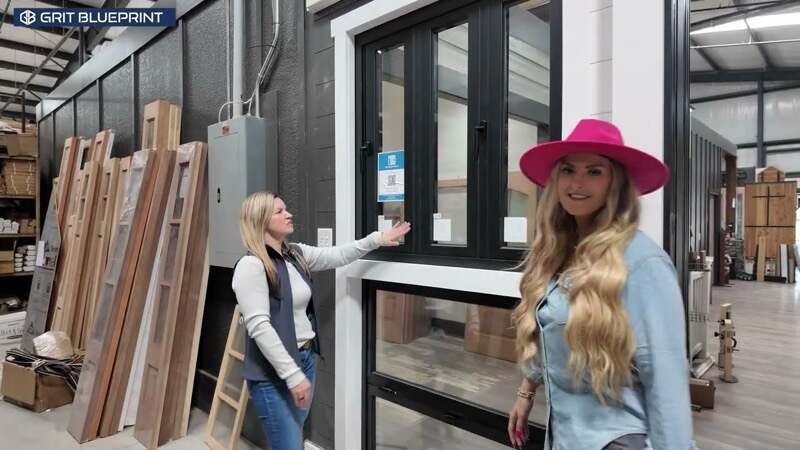
Rowland owns three companies: GR Exteriors, which installs siding, roofing, windows, doors and house wrap; SAM LLC, a manufacturing shop; and HarLand Windows & Doors, a window and door showroom he runs with a partner. He told the story on the Grit Blueprint Podcast. Here is how it worked, in his own words and numbers.
How did Greg Rowland get started?
He was 17 and building swimming pools in Michigan, a job his father lined up for him (2:19). He quit college and followed his parents to Atlanta. There he went to work for a builder as a laborer, hauling lumber, walking roofs and cleaning houses. He calls it “a self-imposed apprenticeship, except I didn’t have anybody to show me what to do” (5:11).
Later he sold vinyl siding at Williams Brothers Lumber, a lumberyard. In 1997 he and his manager there “decided we could do this on our own” and started GR Exteriors (5:34).
The five-minute decision
Years later Rowland and that partner split up and divided their clients. They agreed not to go after each other’s. Then an apartment builder from the partner’s side called and asked Rowland to do its siding. He said no. He was busy, and he had made a promise (7:02).
The builder called again. “Greg, we’re not going to use your partner anymore, so it’s wide open,” Rowland remembers them saying. He still said no. “This was like 2005, and I hung up the phone and just sat there and stared at it for about five minutes” (7:33).
He looked at the market. Lenders “were giving away loans,” his crews were busy, and he thought, “this can’t continue” (7:58). He tells his kids that the three things people always need are food, shelter and clothing. So he asked himself: “Where’s everyone going to live? They’re going to live in apartments.” He picked up the phone and called back: “I will do that” (8:18).
When the recession came, he was doing “a few apartments here and there” alongside mostly houses, “and that five-minute conversation changed everything” (8:24).
How do you diversify a construction business?
You spread the work across different kinds of customers or markets, so one bad year in one of them does not take the whole business down. That is what diversification means. For Rowland it means single-family homes plus multifamily buildings, the trade’s word for apartments and other buildings with several homes under one roof. His reason: “every time the housing market goes down, the apartment business goes up. And it’s vice versa” (8:56).
He does not pretend the switch is smooth. “There’s a transition period in there when it is pretty scary, but it’ll switch, and then you can continue” (8:56).
The worst stretch tested it. “We went from doing, I don’t know, 40 houses a month to one,” he says of the recession. “And that’s why the apartments were so important to us” (12:30). What got him through, he says, was faith and his version of a Warren Buffett line: “Be fearful when everyone else is brave, and be brave when everyone else is fearful” (12:50).
What do you do when a competitor starts taking your work?
Add the work your customers already buy from someone else. When suppliers in the Atlanta area started installing siding themselves, Rowland’s “market share started to slip” (11:05). Market share is the part of all the work in your market that goes to you. He answered by adding roofing, then windows. It was “just a way to bring in revenue,” and now GR Exteriors can offer “a complete exterior package, except for gutters” (11:27).
One company handling the whole exterior is what the trade calls turnkey: the builder makes one call instead of hiring a siding crew, a roofer and a window installer separately. Every time his team pitched it, Rowland says, people “thought it was a good idea, and the business is starting to come in” (11:27).
Turn the part you keep waiting for into a product line
Rowland’s second company came out of a delay. “I got tired of waiting for gable vents and brackets and columns and things like that,” he says (9:24). His crews do not leave a job until it is done, so every piece has to be on site. He started making those parts himself. SAM LLC is short for Synergistic Architectural Manufacturing. It now sells those parts to other companies as well, Builders FirstSource among them (9:24).
One of its products is ACRE, a synthetic wood made with rice hulls that can be stained. Rowland describes it as “all the benefit of PVC, but you can also stain it” (10:16). SAM makes corbels, the decorative brackets under a roof edge or a porch. It makes these, along with gable vents and flower boxes, in ACRE and in PVC and wood (10:37).
The three companies, he says, “feed back and forth on each other” (19:27): the crews install parts the shop makes, on jobs where the showroom sells the windows and doors.
Why service counts as quality
When Rowland started, quality meant a “zero defect kind of a thing.” He learned later that “service was also a quality issue” (13:22). His companies run on one rule: “say what you do and do what you say, every time. And that creates trust” (13:35).

Know who will still buy when your main market stops
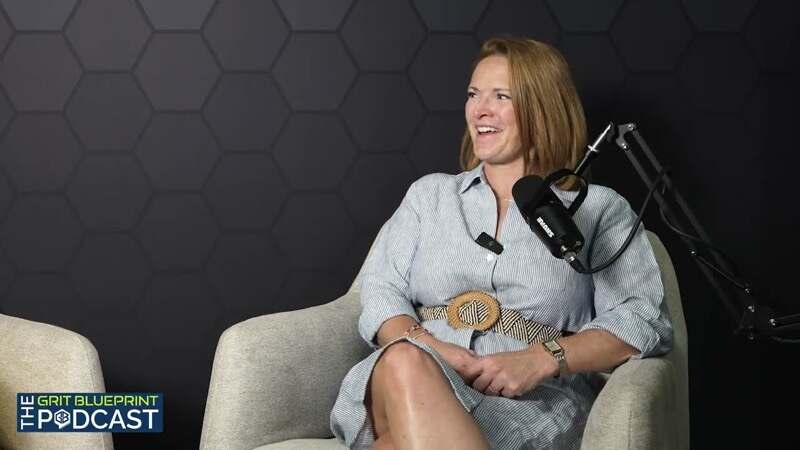
Stefanie Couch hosted the episode. She sees Rowland’s full exterior package as protection as well as growth. “I think turnkey is a competitive moat,” she said, borrowing Warren Buffett’s word for an advantage that keeps competitors out (12:59).
Separate your biggest customers from your best ones. Know which of them would still be buying if your main market stopped. In 2005 Rowland’s biggest work was houses. The customer type that kept GR Exteriors open was the one he almost turned away.
Before you choose your next move, find what is holding the business back and where its real advantage is, then keep it to one to three priorities. For Rowland those were apartments and a fuller exterior package. The third was a shop for the parts his crews kept waiting on.
What to do next
- Split last year’s revenue by customer type: single-family, multifamily, remodel, commercial. Note how much came from the largest one.
- Take each type. Write down what happened to it in the last slow year you lived through. Rowland watched houses fall while apartments held.
- Ask your three best customers what they buy from someone else for the same job. For Rowland’s builders, the answer was roofing and windows.
- List the parts your crews wait on most. Ask whether a supplier, or your own shop, could fix that.
- Want to borrow money or buy equipment to get into a new market? Talk to your own accountant first.
The other half of Rowland’s story, handing three companies to the next generation, is in why a family business handoff takes five years. For where dealers are finding growth, see where independent dealers can still grow.
Questions people ask
What does it mean to diversify a construction business?
It means spreading your work across different kinds of customers or markets, so one downturn does not take all of it. Greg Rowland of GR Exteriors works in both single-family homes and apartments because, in his experience, when one goes down the other goes up.
How did Greg Rowland’s company get through the recession?
Rowland says the houses his company worked on fell from about 40 a month to one. Apartment work he had agreed to take on around 2005 carried the company through.
What is a turnkey exterior contractor?
One company that handles the whole outside of a building, such as siding, roofing, windows and doors, so the builder makes one call. Rowland added roofing and windows after suppliers in his market started installing siding.
What is market share?
It is the part of all the work in a market that goes to your company. Rowland noticed his slipping when suppliers in the Atlanta area started installing siding themselves.
What is multifamily construction?
Residential buildings with homes stacked or joined in ways that do not count as single-family homes, such as apartment buildings. Rowland does siding on both multifamily and single-family work.
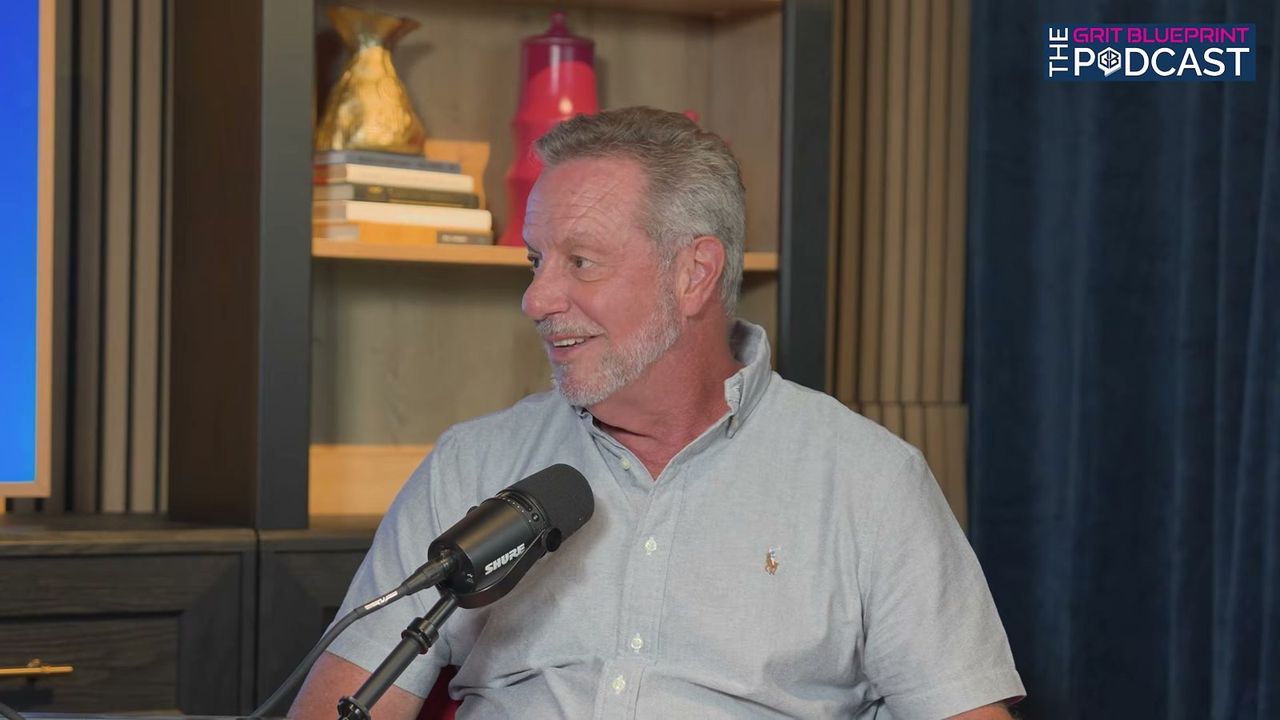
Watch the full interview
Lasting Lessons From Three Decades in Construction, with Greg Rowland.
Greg Rowland owns three Atlanta companies: GR Exteriors, SAM LLC, and HarLand Windows & Doors, which he co-owns with a partner. He explains how apartment work, a manufacturing shop, and a full exterior package kept his business alive through a recession and new competition.
A Grit Guide original. This piece is built from our own interview.
Sources
- Lasting Lessons From Three Decades in Construction (Grit Blueprint Podcast, Greg Rowland) Grit Guide
- HarLand Windows & Doors Grit Guide Companies
Disclosure Greg Rowland’s companies work with Grit Blueprint, the company of Grit Guide host Stefanie Couch, as they say on the episode.