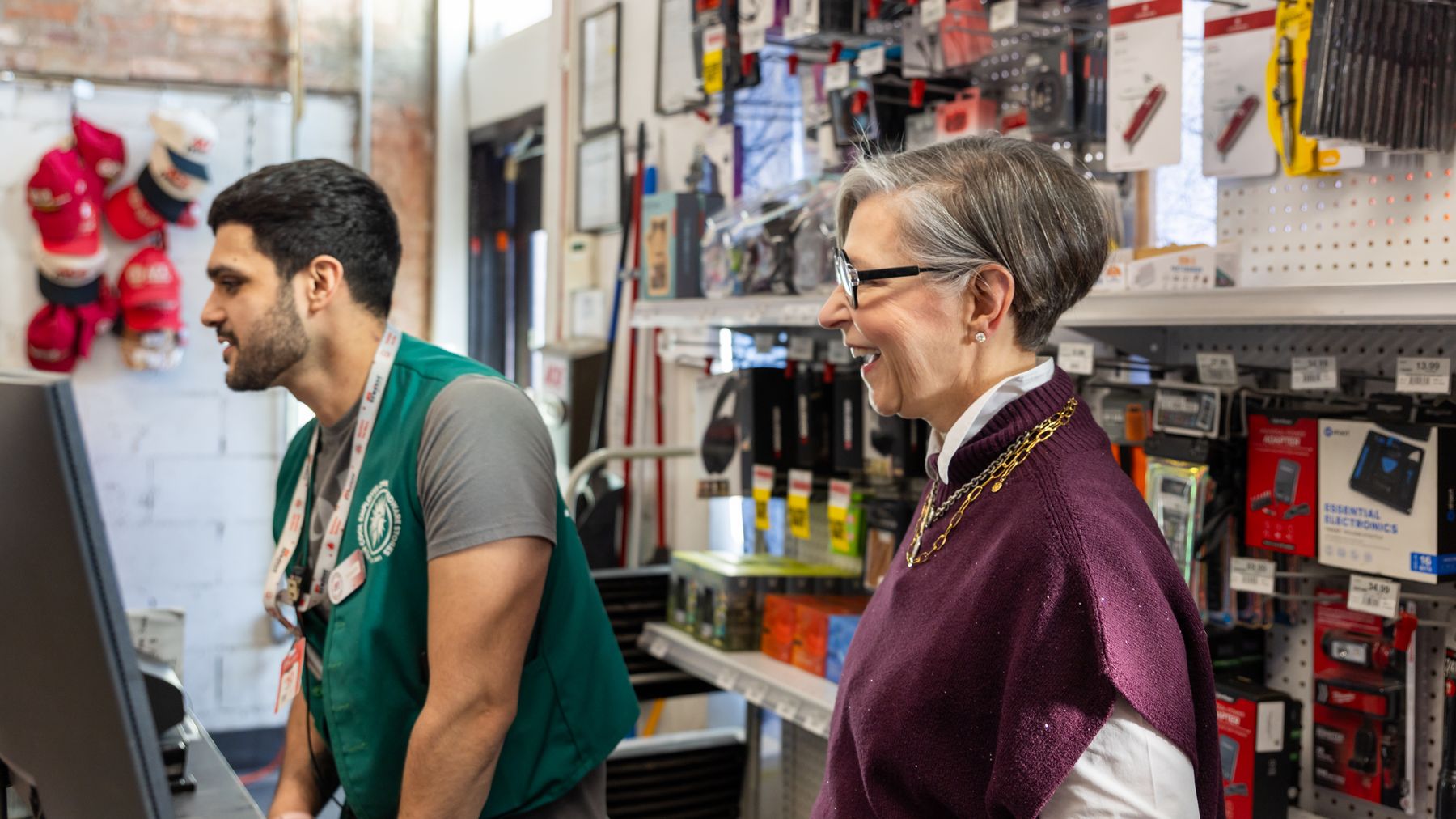
How to Get a Hardware Store Ready to Sell
Deborah Everson and her husband sold the family hardware store his parents started. What she says made it sellable, and what she would tell an owner who has not started.
For educational purposes only: general information, not legal, tax, financial or safety advice. Check your local codes and talk to a qualified professional before you act. Disclaimer

To get a business ready to sell, start long before anyone makes an offer. Get your inventory numbers and financials in order. Bring the store and its merchandise up to date. Talk the sale through with the family, and decide what kind of buyer can keep it going. Deborah Everson and her husband did that over about two years after an offer showed them they were not ready. Then they sold their family hardware store in about 10 months, to a buyer who kept it a hardware store.
Everson told the story on the Grit Blueprint Podcast in 2025. She now speaks to independent retailers about creating value in their businesses.
Why she plans for the what-ifs
Everson’s father was a computer programmer who wrote software to control heating and cooling systems. He let her sit in on his business meetings when she was about nine. Then, on a business trip, he died of a heart attack at Chicago O’Hare airport. “He didn’t have a plan for what life was going to be like if something were to happen to him,” she said (3:40). Everything in the business revolved around him. Her mother put the family’s money, including the life insurance, into trying to keep it going. Within about two years it was gone, everything except the house.
That is why she tells owners to think about the what-ifs early, she said.
When should a business owner start planning an exit?
Now. “Now is the time to start planning your exit,” Everson said (6:25). She compares it to retirement: “you wouldn’t go to your financial advisor 30 days before you’re ready to retire and say, hey, I’m ready to retire.”
As she explains it, exit planning sets the business up so your legacy continues. Your legacy can continue through a family member, a manager, an outside buyer or, if the store is big enough, an ESOP. An ESOP, an employee stock ownership plan, is a trust through which employees buy the company. For how one owner did that, read how one hardware owner sold her stores to her employees.
It starts with three what-ifs, she says: something happens to you and you can no longer be in the business; you decide you are ready to sell; someone makes you an offer you cannot refuse. For the last one she adds a test: “Would I know that that’s a good offer?” (7:12).
First, the store had to be worth buying
Everson was an IT project manager when she married into the business. Her husband’s parents had started the store, which had served its lake community for more than 50 years. A couple of years into the marriage, he told her the store was not doing well. She left a six-figure job to make $12 an hour there as its project manager (15:17).
The store had once been about 80% trade customers, she said: electricians, plumbers and painters. After the housing crash it became about 80% homeowners, and it struggled. Customers would tell them they had been everywhere else and finally found help there. They meant it as a compliment. To her it said the store was their last resort.
So the family made a five-year plan. They ran a customer survey and heard hard things: overpriced, dated, too expensive. They also heard what people loved: a family-owned store where someone could help them. They remodeled and reset the store with their distributor. They built a paint counter big enough to hold classes and added home decor. By her account, “we changed people’s perception of us of being their last resort, to becoming their first choice” (20:55).
The offer that showed they were not ready
In 2020 the only other hardware store in town closed, and the Eversons’ store was busier than ever. That is when someone approached them about buying it. They talked, and realized the buyer was not a good fit. They realized something else too. “We didn’t have our inventory and our financials and all of that stuff in order,” she said (40:25).
So they spent about two years getting ready. They nailed down their inventory numbers and made sure the merchandise on the shelves was current. They looked hard at how the store looked and got their financials in order (41:07). If you are not sure your own books would hold up, the buyer’s side explains why it matters. Lenders read the seller’s tax returns before they approve a loan. See how buying an established business with an SBA loan works.
The same two years started a harder conversation. Her husband’s parents still worked in the store. Her father-in-law, then in his 80s, had always pictured working until he no longer could. Talking about a sale early, she said, prepared them as well as the couple.
How do you choose the right buyer?
Decide what you want to survive the sale, then find the buyer who can protect it. Everson’s first dream was to sell to a young family. But the market had grown so much that she believed it would crush a young family, especially one without hardware experience. She and her husband decided they needed a larger organization, one that could ride out the ups and downs of the market and keep the store a hardware store. They owned the property and could have sold it for something else. They chose not to, because “we cared enough about our community to say we want to keep a hardware store in our community” (44:35).
Once they knew who they wanted, they sent that buyer a letter through their attorney. They “had a very good business attorney which I highly recommend,” she said (42:47). From start to finish the sale took about 10 months. Then they handed over the keys and the buyer opened on day one: “we literally made it turnkey for them” (43:35).
They also split the work. Everson led the sale; her husband kept running the store. “If we were both trying to sell the store, who would keep the store running?” she said (53:41).
She admits the doubt at the start, “at first wondering is our business worth anything” (55:42). Today the store still runs as a hardware store under another name, and her father-in-law, now 88, still shops there.

Make the store run without you before you sell it
Everson’s father and her own store are the two ends of the same lesson. In one, everything revolved around one person and nothing was written down. In the other, the numbers, the merchandise and the plan were ready, and the store outlived the sale. Ask yourself what happens when one person holds all the answers. If that person is you, getting ready to sell is mostly one kind of work. It is making the business run without you.
Stefanie Couch put the timing bluntly in a post after her interview with Gina Schaefer: “Most business owners start planning their exit five years too late” (LinkedIn, April 2026). In that post, Schaefer advises building a lifeline list now: your attorney, banker, CPA, financial planner and business broker. She also advises asking whether you trust each one and whether they know how to sell a business. This article is one family’s experience. Talk to your own attorney and accountant before you act on any of it.
What to do next
- Write down your three what-ifs: something happens to you, you decide to sell, someone makes an offer tomorrow. Note what would happen in each.
- Count your inventory and compare it with what your system says. Write down the gap.
- Ask your accountant whether your financial statements and tax returns show what the business really earns.
- Name the people on your lifeline list, and ask each one whether they have helped sell a business like yours.
- Decide what must survive a sale, such as the name, the people or a hardware store in town. Write it at the top of your plan.
More on handing a business on: why a family business handoff takes five years and lessons from The E-Myth Revisited.
Questions people ask
When should a business owner start planning an exit?
Now, says Deborah Everson, who sold her family’s hardware store. She compares it to retirement planning: you would not go to a financial advisor 30 days before you retire and ask for help.
What is exit planning?
Exit planning means deciding how the business will continue without you, and getting it ready. Everson lists the paths: a family member, a manager, an outside buyer or, for a larger store, an ESOP, where the employees buy the company through a trust. It starts with asking what would happen if you could no longer be in the business.
What did Everson do to get her store ready to sell?
Over about two years she and her husband nailed down their inventory numbers, made sure the merchandise on the shelves was current, looked hard at how the store looked and got their financials in order. They also talked it through with his parents, who still worked in the store.
How long does it take to sell a hardware store?
For the Eversons it was about two years of preparation, then about 10 months from the first letter to the buyer until they handed over the keys. That is one store’s timeline.
Who should help me sell my business?
Everson recommends a good business attorney; theirs sent the first letter to the buyer. Gina Schaefer, who sold her stores to her employees, tells owners to line up an attorney, banker, CPA, financial planner and business broker early, and to check that each one knows how to sell a business. Talk to your own attorney and accountant about your situation.

Watch the full interview
Exit With Purpose: Creating Value When It’s Time to Let Go, with Deborah Everson. Time stamps are from the podcast audio.
Deborah Everson left a six-figure IT job for $12 an hour at her husband's family hardware store, helped turn it from last resort to first choice, then sold it. She explains the survey, the remodel, the events and why exit planning starts now.
A Grit Guide original. This piece is built from our own interview.