What a Trade Association Does for Your Business
Codes, standards, state rules and the people you meet. WDMA’s CEO explains what members get for their dues and how to use it.
For educational purposes only: general information, not legal, tax, financial or safety advice. Check your local codes and talk to a qualified professional before you act. Disclaimer

What does a trade association do? It is a group that companies in the same business pay dues to join, so they can work on problems none of them can solve alone.
For window, door and glass companies, that means speaking up on codes, test standards and state rules, collecting industry numbers no single company has, and running the shows where members meet architects, contractors and mentors. John Crosby is president and CEO of the Window & Door Manufacturers Association (WDMA). He explains what members get and how to use it.
John Crosby started out as a lobbyist. He found that his strength was explaining policy so other people could follow it. “I’m more of a communicator than a policy wonk,” he said.
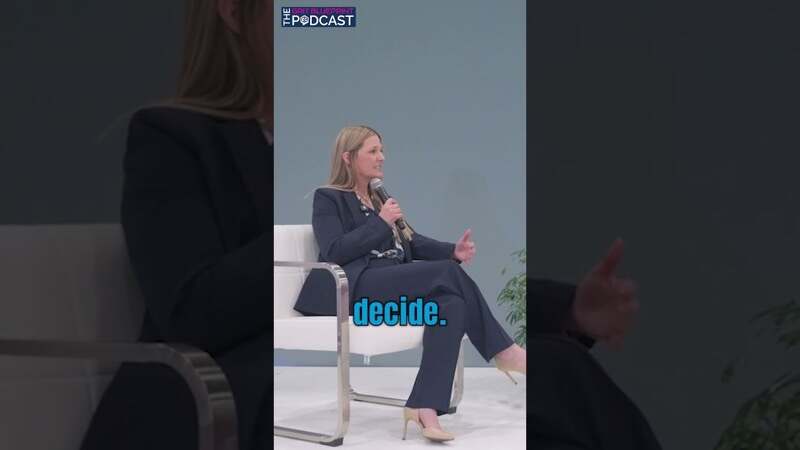
Today he runs WDMA, whose member companies make windows, doors and skylights. He spoke with the Grit Blueprint Podcast at the group’s Executive Management Conference in Boston. He was about a year into the job. The interview was published in November 2025.
Most people in a plant or a showroom never deal with their association directly. (If the company types are new to you, start with how the building industry works.) Crosby described what goes on inside one and what a member can take from it.
What does a trade association do with your dues?
At WDMA, they pay for a narrow mission and the staff work behind it. WDMA’s stated job is narrow. “Our mission is to promote the adoption of high-performance windows, doors, and skylights in all kinds of projects,” Crosby said (0:06), across North America, Canada included (9:13).
He pairs that with a rule he has repeated in every association he has worked for: “no money, no mission” (5:48). An association has to bring in revenue to do its work. He would rather grow income from other sources than charge members more. “The last thing I ever want to do is raise dues,” he said (27:38).
What does advocacy mean for a trade association?
Advocacy is the word associations use for speaking up for their members. Most people hear it and think of lobbying Congress. Crosby says it goes much further down.
That word doesn’t just mean legislation. It is rooted all the way down to the standards level.
 John CrosbyPresident and CEO, Window & Door Manufacturers Association
A standard is a written rule for how a product is tested and what it has to do. A building code is the set of rules a building must meet. A model code is a shared version that governments can adopt.
WDMA writes some standards of its own. It argues its members’ case in standards written by other groups. It takes part when model codes are developed. It does not lobby individual state code officials. Crosby said code work is a huge part of the job that even executives at member companies do not always notice. The aim, he said, is not simply to get the industry’s way.
Fifty sets of rules
The harder work now is in the states. Crosby said more rule-making has moved from Washington to state capitals. He said states you would expect to act alike can write very different rules. His team has to “read every single proposed rulemaking and find the commonalities and the distinctions.” Then they check that against what members say they need. He called it “playing whack-a-mole against 50 states.”
What members ask for is not always what an outsider would guess. On one set of state chemical restrictions, he said, members were not asking to stop the rule. “What they really want is time,” he said. They want a schedule a factory can meet.
For a manufacturer, that is the practical value. Someone reads every proposed rule and tells you which ones touch your product. That person argues for enough time to change it.
Why do members need to get involved?
Because a small staff cannot do this alone. “We punch above our weight because the members get involved,” Crosby said. That kind of involvement cannot be bought, he added, and an association cannot win with policymakers “without the voice of the members.”
Numbers no single company has
Crosby’s other project is data. When he spoke in late 2025, WDMA hoped to finish what he called “a census of the industry,” an economic impact study, by the end of the first quarter. The association needs those numbers to make its case to lawmakers. Members get something too: a picture of the whole industry. No single company can build that from its own sales.

Your association hears about new rules before you do
Most of what an association does stays invisible until a rule lands on your product. With every state writing its own, a manufacturer that ships to all 50 is a cook asked for fifty dishes that are not on the menu. Someone has to read the orders before the kitchen gets them. As Stefanie Couch put it to Crosby: “It’s hard to solve a problem you don’t know you have, even if someone else knows you have it” (35:25). Your association is the someone else. The steps below are how you hear about the problem in time.
What to do next
- Find out which associations your company already belongs to. Ask who receives their emails.
- Have code, standard and state rule updates forwarded to you. For each one, ask two things. Does this touch a product we make or sell? By what date?
- Answer the surveys. Industry numbers are only as good as the replies behind them.
- Go to one show or conference with a written list. Name the kinds of people or companies you need to meet.
- Volunteer for one committee.
Questions people ask
What does a trade association do for its members?
It speaks up for them on laws, building codes and product test standards, reads proposed state rules, collects industry numbers and runs meetings and trade shows. John Crosby of WDMA says that advocacy reaches all the way down to how products are tested.
What is the difference between a building code and a standard?
A standard is a written rule for how a product is tested and what it has to do. A building code is the set of rules a building must meet, and a model code is a shared version that governments can adopt. WDMA writes some standards and takes part when model codes are developed.
What do members get for their dues?
From the interview: someone who reads every proposed rule and tells you which ones touch your product, a voice in standards and codes, and industry data no single company can build.
Watch the full interview
From Policy To Performance with John Crosby (November 2025).
John Crosby, president and CEO of the Window & Door Manufacturers Association, explains how standards, model codes and state rules shape what manufacturers can sell, and why the industry should teach consumers what better windows, doors and skylights do for a home.
A Grit Guide original. This piece is built from our own interview.
Sources
- From Policy To Performance: Building A Stronger Window And Door Industry with John Crosby (interview published November 18, 2025) Grit Blueprint Podcast on Grit Guide. Quoted at 0:06, 3:51, 5:48, 10:04, 10:49, 11:25, 11:54, 12:23, 13:03, 13:52, 27:38, 29:26.